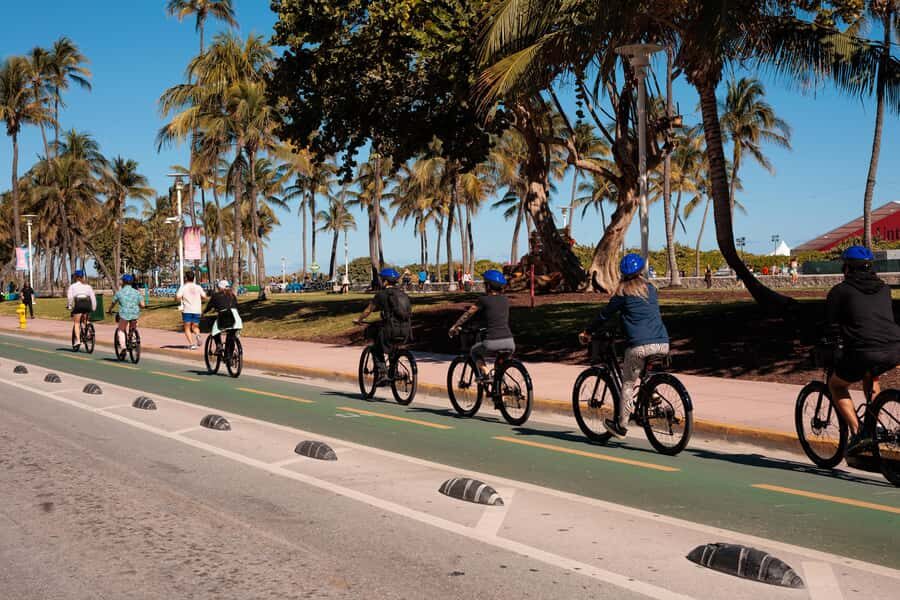
You’ll start at Caffe Umbria, get your bike and helmet, then roll through Art Deco streets, major landmarks, and oceanfront views with built-in food stops. Star Island access is seasonal, and on warmer months you’ll spend more time by South Pointe Pier instead. If you’re traveling with a tight schedule, note the full 4.5-hour time block is the price of admission for the mix of food and sights.
Key highlights I’d plan around
- Ocean Drive and Art Deco stories on a bike route that keeps you moving instead of waiting around
- Noel and Alan-style guiding with clear explanations that connect food to place
- Five filling tastings plus dessert timed so you don’t get stuck hungry between photo stops
- South Pointe Pier views and manatee chances with the Atlantic and Biscayne Bay in the mix
- Seasonal Star Island ride (November–April) versus extra South Pointe time (May–October)
- VIP drink upgrade option with 3 beverage pairings for adults at arrival
Miami Beach on Two Wheels: The Value of a Bike + Food Plan
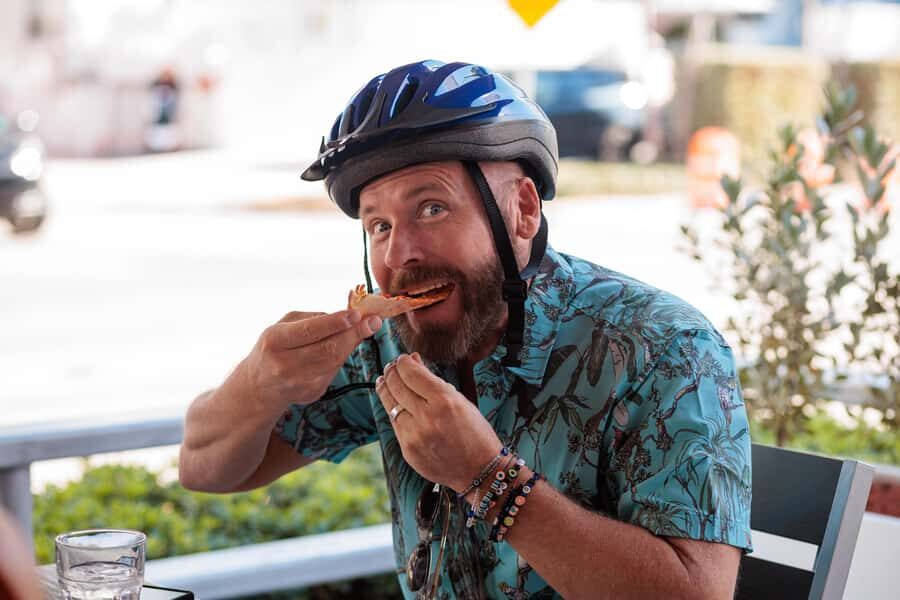
This tour works because it solves two common Miami Beach problems at once. Parking and traffic slow people down. A bike tour keeps the momentum, and the food stops give you a reason to slow down in the right places.
At $89 per person for about 270 minutes, you’re paying for more than sightseeing. You’re paying for a guided route, a provided bike and helmet, and five food tastings plus dessert that add up to something close to a full meal. If you were to piece together a walking tour plus multiple restaurant meals, you’d likely spend about the same or more, without the bike route or guided context.
The vibe is relaxed, not rushed. You’ll be riding, stopping, eating, and snapping photos, with the guide keeping the flow. Just remember it’s an active experience, and you’ll want comfortable shoes and sunscreen.
Starting at Caffe Umbria: Bikes, Helmets, and a Smooth First Stop
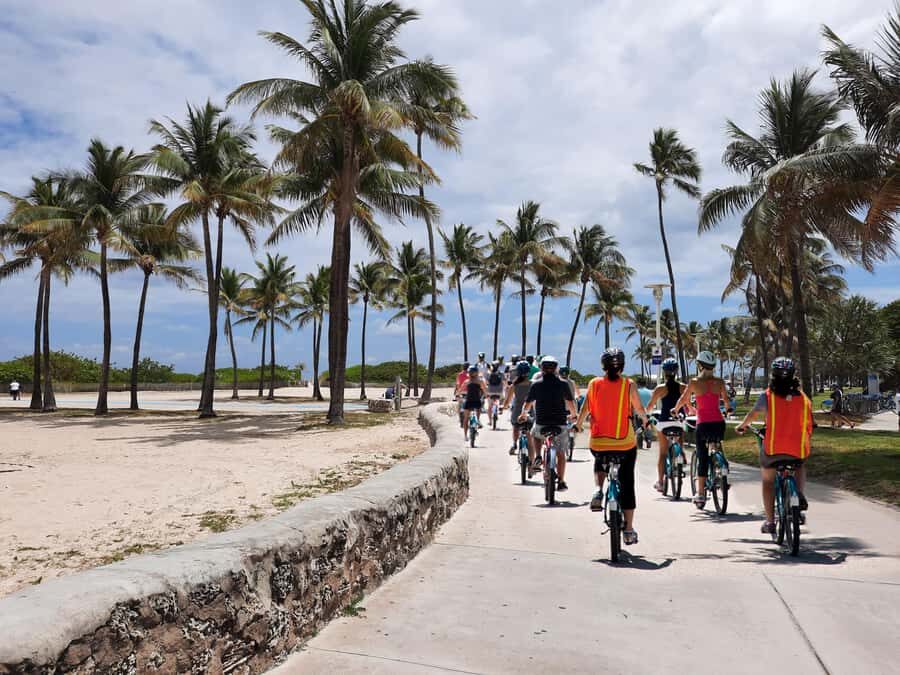
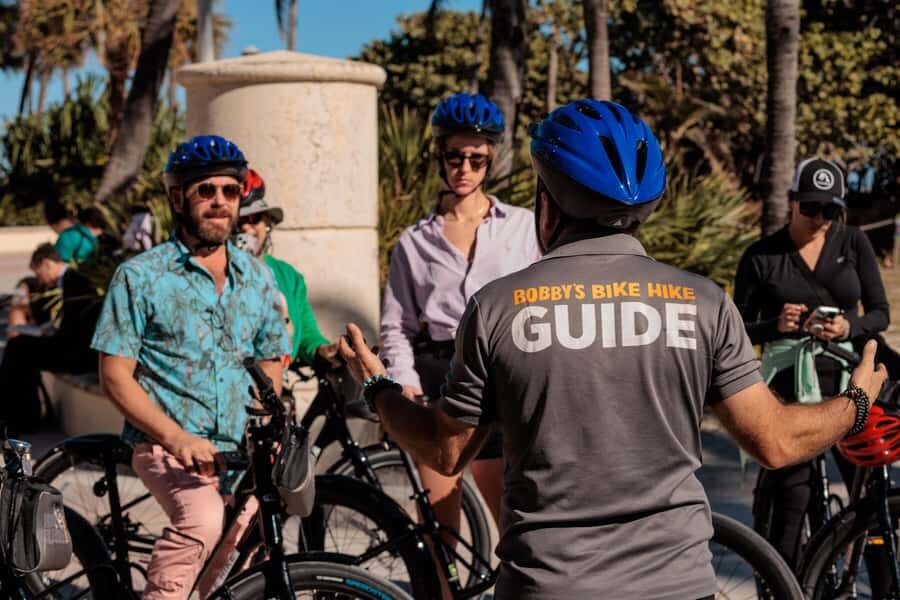
Your meeting point is Caffe Umbria, and you should look for a guide wearing a Bobby’s Bike Hike & Food Tours – Miami shirt. Check in happens before you roll, so arrive about 15 minutes early. Once you’re equipped, you’ll ride ahead as the tour moves through South Beach’s core areas.
The first food tasting is a local stop right after you start, which I like. It gets the trip rewarding early, so you’re not thinking only about later meals while you’re still warming up. It also sets a tone: you’re eating things connected to place, not just picking whatever looks good on the menu.
A practical note: you’ll want a water bottle and a plan for heat. The tour runs in all weather conditions, and South Florida sunshine can hit hard even when the wind feels friendly.
Ocean Drive and the Versace Mansion: Art Deco Meets Real City Stories
One of the best parts of the route is how it uses Ocean Drive as more than a photo line. You’ll get a guided look at the Art Deco architecture while you bike along, then you’ll see major landmarks tied to pop culture, including the Versace Mansion.
This is where the guiding matters. Art Deco buildings look cool on postcards, but the explanations about what you’re seeing give you something to remember beyond the skyline. You start noticing details you’d normally walk right past.
You also get that classic Miami Beach mix of design and spectacle. Oceanfront views and street-level architecture land differently at bike speed because you can actually cover ground without turning it into a sprint. And because you’re stopping for food shortly after, it doesn’t become sightseeing-only fatigue.
If you hate the idea of being stuck in a tight group that slows down every few feet, you’ll likely appreciate this format. You’re still in a group, but the bike segments keep the rhythm.
Lincoln Road and Biscayne Bay: Views You Can Use After the Tour
After the Ocean Drive stretch, you’ll move toward Lincoln Road for a guided ride through the area. This is a handy segment because Lincoln Road is one of those places where it helps to understand what’s around you. A guide can point out the best angles and the vibe shift from street spectacle to sidewalk-life energy.
Then comes a photo stop at Biscayne Bay. You’ll get a moment to look out and reset your eyes between tastings. Even if you’re not the type who takes a hundred photos, it’s useful. It breaks the ride into sections and helps you catch the scale of the waterfront.
This segment is also a good time to think about your next moves. Once you’ve seen the bay and the grid, it’s easier to plan a self-guided stroll later on without second-guessing distances. The tour doesn’t just show sights. It helps you build your own mental map.
Holocaust Memorial and Lummus Park: Not Every Stop Is About Food
Miami Beach has layers, and this tour doesn’t flatten them. You’ll stop at the Holocaust Memorial Miami Beach for a guided look and learn about the meaning behind the site. It’s a quieter moment inside an otherwise lively day, and I think that contrast is valuable.
After that, you’ll ride through Lummus Park, which brings you back to the oceanfront feel. This stretch is practical too. Lummus Park helps anchor your sense of where the beaches sit along the route, so the earlier Art Deco stops and later South Pointe views make more sense as one connected story.
One consideration: this tour moves fast by design, so if you prefer long, slow museum-style pacing, you might want to plan a separate add-on. Think of these stops as orientation and context, not deep immersion.
South Pointe Pier, Manatees, and Where Star Island Fits
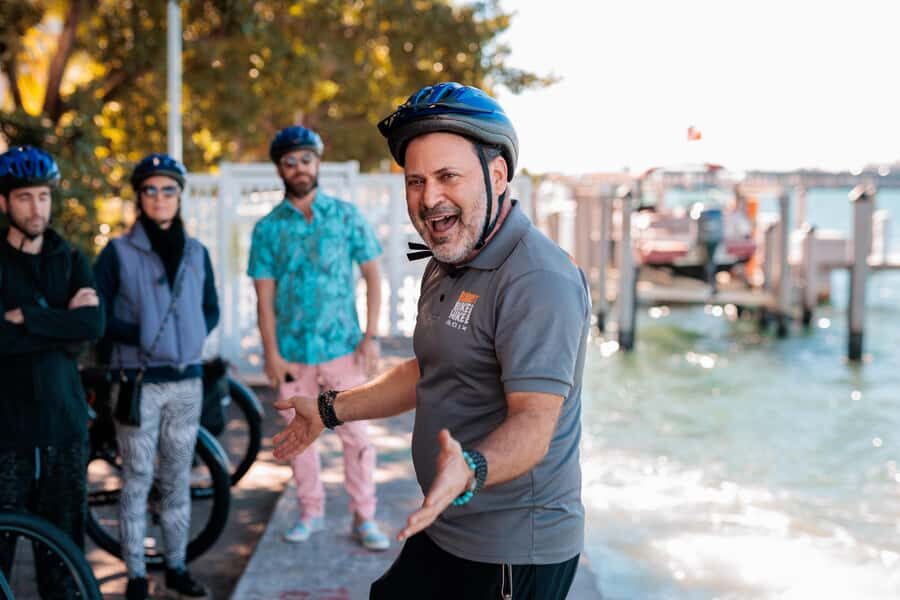
The oceanfront payoff comes near the end. You’ll arrive around South Pointe Park Pier for photo stops and sightseeing, with a strong focus on Atlantic Ocean views. The tour notes a chance to spot wild manatees, which is one of those Miami details that feels like a bonus when it happens.
Here’s the seasonal rhythm that matters for planning. From November through April, you ride to Star Island for a photo stop and guided sightseeing. From May through October, you spend more time around South Pointe Pier instead, which gives you the breezes, the wider ocean outlook, and a better chance of seeing marine life without the longer star-gates detour.
Either way, Star Island is treated as a peek behind the gates rather than a full-on visit. You’ll see it from the right vantage points and hear what the guide can share about the island’s fame. If celebrity homes are your thing, the seasonal ride is the version to target.
Five Tastings Plus Dessert: What You’re Eating and Why It Works
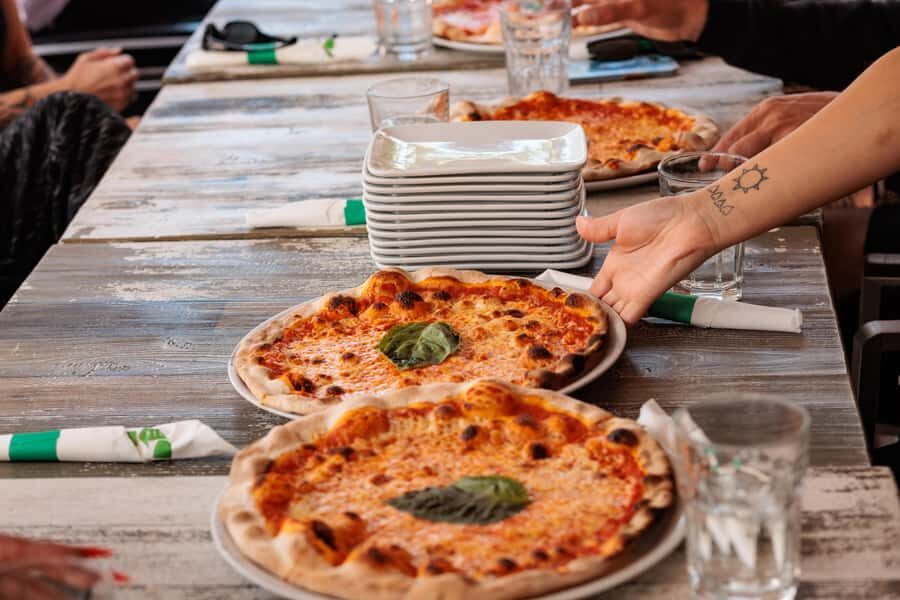
The tour is built around five local tastings that the company frames as enough to feel like a full meal. The schedule supports that idea. You won’t just get tiny samples every hour. You’ll have breaks long enough to actually taste and settle your appetite.
Here’s how the food pacing feels across the day:
- First tasting right after start at Caffe Umbria area: good for momentum and comfort early on.
- Second tasting after the Ocean Drive segment: you’re eating while the sights are still fresh in your head, which helps everything feel cohesive.
- Hidden neighborhood food stop for about 30 minutes: the longer tasting slot is where the tour shifts from snack mode to proper meal mode.
- A regional food tasting stop for about 30 minutes: this is another anchor point, so by the time you reach the later oceanfront sights, you’re not running on empty.
- Dessert at a local bakery for about 30 minutes: you finish sweet, not stuffed. Key lime pie is explicitly mentioned as part of the tastings, and it’s a smart way to close a Miami Beach food loop.
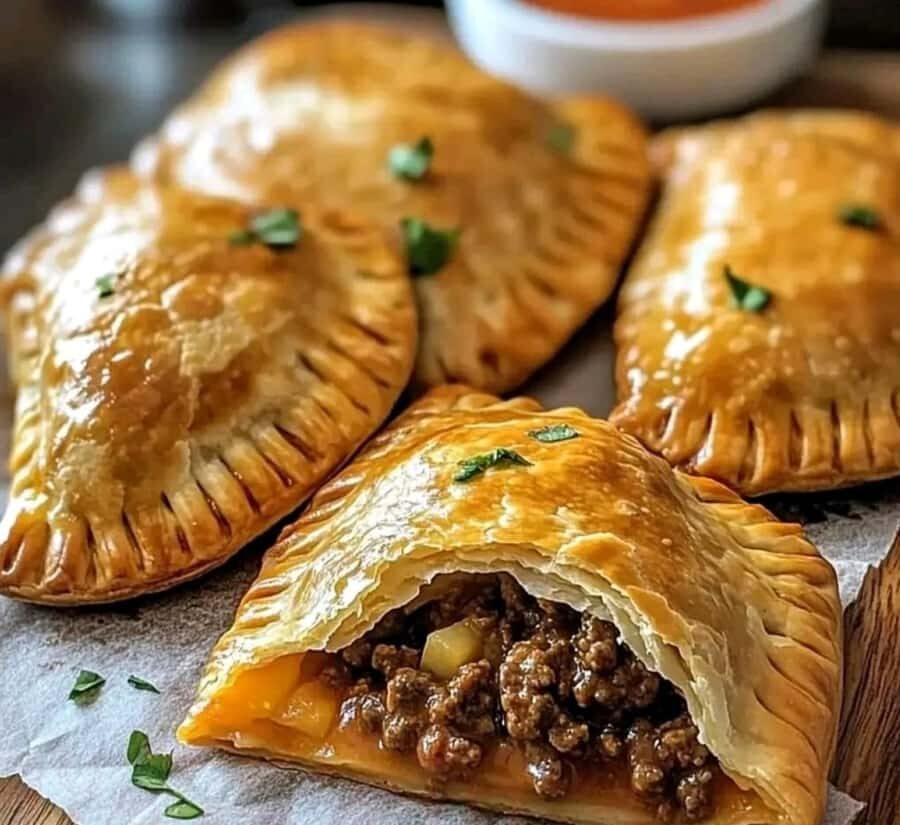
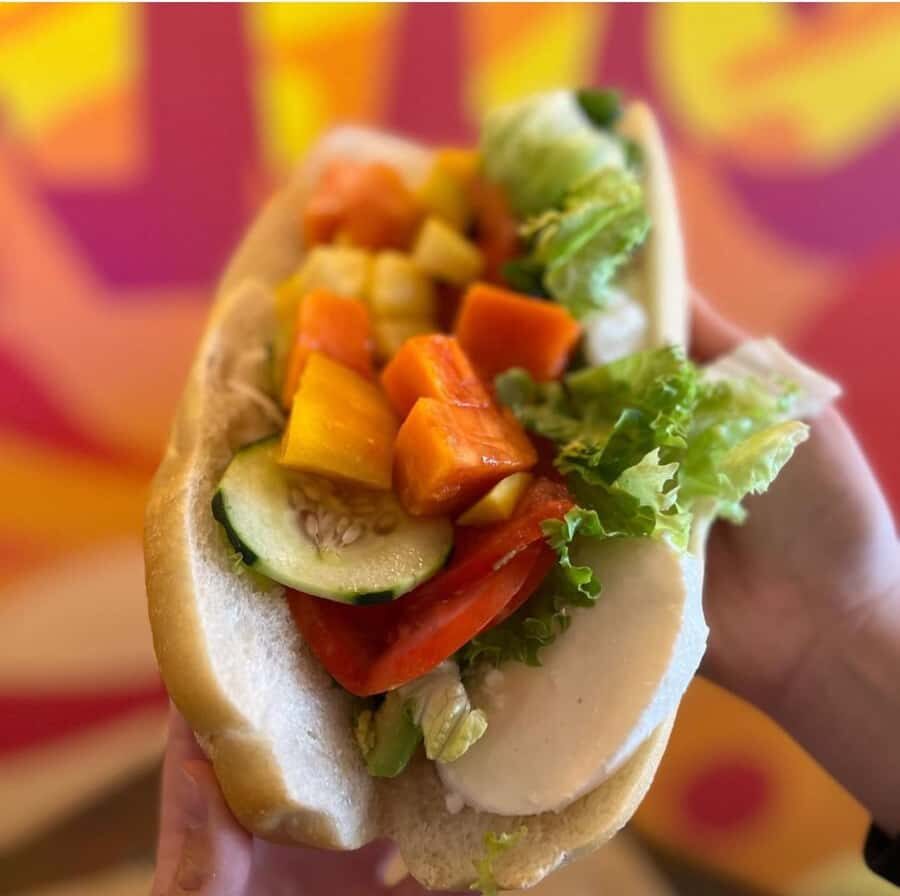
The exact restaurants can change, but the types of food are clearly tied to Miami’s flavor mix: things like empanadas, Latin comfort dishes, tropical sandwiches, pizza, and Key Lime Pie. If you’re picky about spicy or prefer specific dietary needs, you’ll want to flag that in advance because vegetarian and gluten-free options are available upon notification.
What I like most is the way food and storytelling connect. One of the strongest themes in guide feedback is that dishes come with context. That means you’re not just chewing. You’re learning why these flavors landed in Miami and what influences shaped them.
If you’re the kind of eater who wants to taste and understand, this format hits the sweet spot.
VIP Drink Upgrade and How to Decide If It’s Worth It
A VIP adult drink package is available as an optional upgrade. It adds 3 beverage pairings for $19.99 per person, offered upon arrival. It’s designed to complement the foodie stops.
I see it as a simple decision:
- If you’re a drink pairing person and you want a little extra pace and variety, the VIP upgrade can make the tastings feel more special.
- If you’d rather keep your day lighter on calories or you prefer to choose your own drinks later, you can skip it and still leave satisfied with the five tastings and dessert.
Either way, you’ll be biking and eating in warm conditions, so don’t forget hydration basics.
Price and Logistics: The Bits That Matter for a Smooth Day
This tour includes everything you need to ride: bikes and helmets, plus the live local guide and food. Hotel pickup and drop-off aren’t included, so you’ll want to be able to reach Caffe Umbria on your own.
You also get an express approach with security checks, which can save time in a city where delays happen. And the tour runs in all weather conditions, so bring weather-appropriate clothing and keep sunscreen in the top pocket of your day bag.
A few rules are important for comfort:
- No smoking
- No luggage or large bags
- No open-toed shoes
- Bring ID
Also, plan on guide gratuity. It’s accepted, and you’re advised to bring cash or Venmo, since there’s no ATM on site.
Group timing has one more real-world factor: there’s a two-person minimum for the tour to run. If it doesn’t hit that threshold two hours before, the operator may reschedule you or cancel with a full refund. If you’re traveling solo, book early and keep some flexibility in your schedule.
Who This Miami Beach Food and Bike Tour Fits Best
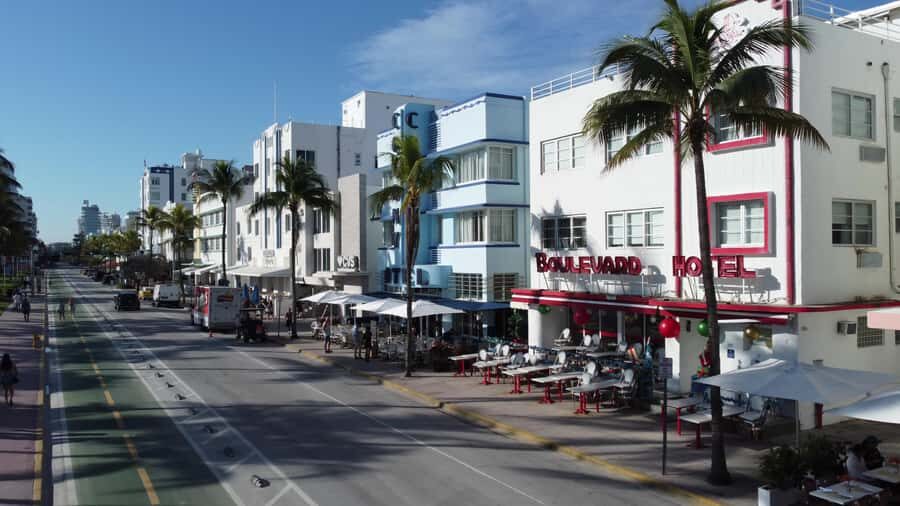
This is best for adults who can ride a bike comfortably and want a guided mix of food and landmarks. If you love South Beach’s iconic scenes but don’t want to plan restaurant hopping, this tour handles the hard part.
It’s also a great fit if you:
- Want to see Ocean Drive, Lincoln Road, and South Pointe Pier without negotiating routes and parking
- Like food with context, not just food on a plate
- Prefer a day that blends a few serious moments, like the memorial stop, with lighter sightseeing
It’s not a fit if you can’t ride a bike, if you’re bringing children under 18, or if you have trouble managing an active day in sun and weather.
One more thought: the tour is only in English, so plan for that if you’re more comfortable with another language.
Should You Book This Tour?
I’d book it if you want one day in Miami Beach that feels efficient and fun: bikes for the movement, food for the reward, and guide stories for the meaning. The five tastings plus dessert are the big value anchor, and the itinerary is designed to keep you from getting stuck in one neighborhood all day.
You might skip it if you prefer long, unhurried sightseeing with minimal eating, or if biking isn’t your thing. Also consider the seasonal swap: plan around Star Island access in November–April if that’s a priority, and plan around South Pointe Pier time in May–October if you want more beachfront downtime.
If your idea of a great vacation day includes pedaling with a purpose and tasting what makes Miami Beach different, this is a solid bet.
FAQ
How long is the Miami Beach guided bike tour with food tasting?
The tour runs for 270 minutes, which is about 4.5 hours.
Where is the meeting point?
You meet at Caffe Umbria. Look for your guide wearing a Bobby’s Bike Hike & Food Tours – Miami branded shirt.
What’s included in the tour price?
The tour includes a guided bike route and all equipment (bike and helmet), plus 5 curated tastings plus dessert from local spots.
Is there an option for drink pairings?
Yes. You can upgrade to a VIP adult drink package with 3 drink pairings for $19.99 per person, offered upon arrival.
Are vegetarian or gluten-free options available?
Vegetarian and gluten-free options are available. You should notify the tour operator in advance.
Does the tour run year-round to Star Island?
Star Island is part of the experience from November through April. From May through October, you spend more time around South Pointe Pier instead.
Do I need to be able to ride a bike?
Yes. This tour is only suitable for those who can ride a bike, and it’s not suitable for people who can’t.
What age is this tour for?
This tour is only suitable for adults aged 18 and over.
What should I bring on the day?
Bring ID or a passport, comfortable shoes, sunscreen, water, and a camera if you want photos. Also wear weather-appropriate clothing.
Can I cancel if my plans change?
Yes. You can cancel up to 24 hours in advance for a full refund.
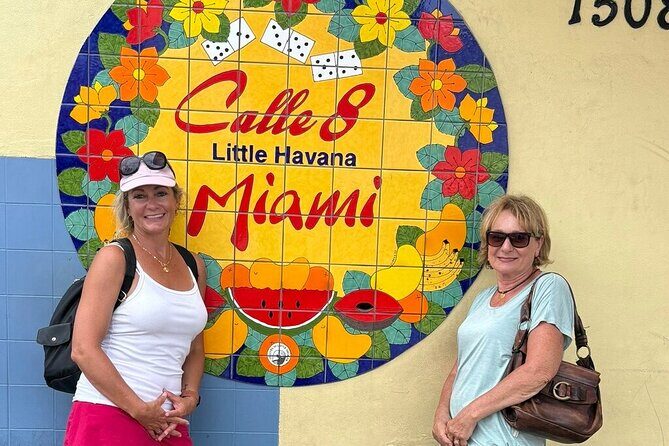
]]>This 2.5-hour Little Havana walk strings together fashion, food, and real neighborhood landmarks in a way that feels grounded, not staged. I like how the stops move fast enough to keep your energy up, but slow enough for you to actually learn what matters—like why a guayabera is more than a shirt, and why a cigar factory is cultural craft, not a tourist prop.
I especially love the Cuban food part. You get coffee or tea, Cuban pastries, and soda/pop guarapo, then you cap it with a churro stop that lets you choose toppings and fillings. One consideration: the day relies on good weather, and several parts are outdoors or involve standing in small spaces.
If you’re lucky with your guide, you may get someone like Danny, who’s been praised as fun, friendly, and a strong fit for a group of about nine. And with a max group size of 30, you’re unlikely to feel lost in a crowd.
Key highlights
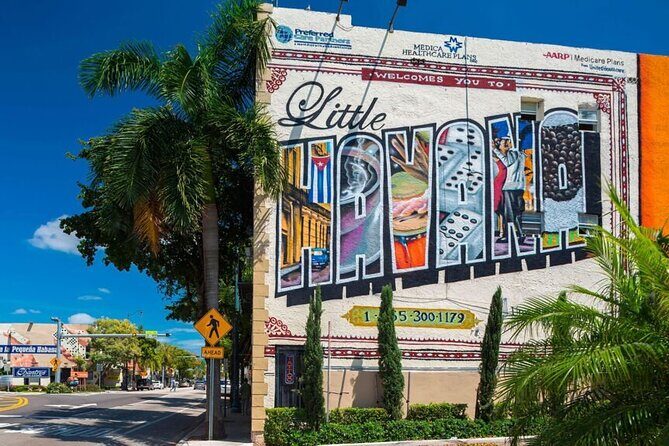
- D’Asís Guayaberas: Learn how pleats, pockets, linen/cotton, and embroidery tie to Cuban identity
- Little Havana Cigar Factory: Watch torcedores roll by hand and understand filler, binder, and wrapper
- Domino Park at Maximo Gomez: See live matches where politics and community stories mix with play
- Bay of Pigs Monument: A reflective stop for Brigade 2506 and the names of those who fell
- Party Cake Bakery + cafecito: Pastries you can taste, plus the neighborhood bakery vibe
- Ball & Chain + Calle Ocho Walk of Fame: Music venue history and sidewalk stars from Celia Cruz to Gloria Estefan
Why This 2.5-Hour Route Feels Just Right
Little Havana can feel like sensory overload—music, color, people, and food all at once. This tour keeps a smart pace: short stops where you get a clear takeaway, then you walk a little more to connect the dots. It’s built for the reality of travel time, so you still leave with a sense of place instead of a pile of random photos.
I like that it pairs craft and commemoration with snacks. A guayabera shop explains style and identity. A cigar factory explains process and patience. Domino Park explains how community holds together through years of change. Then you hit Bay of Pigs for the emotional weight. That mix is what makes the evening-long feeling of Little Havana fit into a tidy 2 hours 30 minutes.
Start at the Little Havana Visitor Center (and Set Expectations)
You meet at the Little Havana Visitor Center, 1600 SW 8th St, Miami, FL 33135, and you end back at the meeting point. That matters more than it sounds. You don’t need to figure out mid-tour logistics or hunt down your group after a photo stop.
Before you go, plan for a walking day with some time standing. Comfortable shoes help because you’ll be moving between neighborhood stops and spending time at parks and storefronts. Also, this tour is offered in English, and it’s designed for most travelers, with service animals allowed.
One more practical note: average booking runs about 35 days in advance. If you want a specific departure date, don’t treat this like a last-minute casual plan.
D’Asís Guayaberas: More Than a Cuban Shirt
Your first stop is D’Asís Guayaberas, a family-run boutique known for the traditional Cuban guayabera—those shirts with fine pleats, pockets, and classic styling. It’s an elegant introduction to the neighborhood because it frames what you’re seeing later. You’re not just collecting sights; you’re learning symbols.
Here’s what I’d pay attention to during your visit:
- The origin story and why the guayabera became a symbol of Latin pride and heritage
- The materials and finishing details, often linen or cotton with embroidery
- The range of styles and colors, from traditional whites to newer interpretations
You’ll also have the option to try on pieces. That’s not just a retail perk. When you feel the fit and see how the details land on fabric, the whole idea of craftsmanship becomes real fast. If you want a souvenir that doesn’t look like it came from a generic rack, this is the kind of stop where you can buy something with meaning.
Little Havana Cigar Factory: Hand-Rolling in Real Time
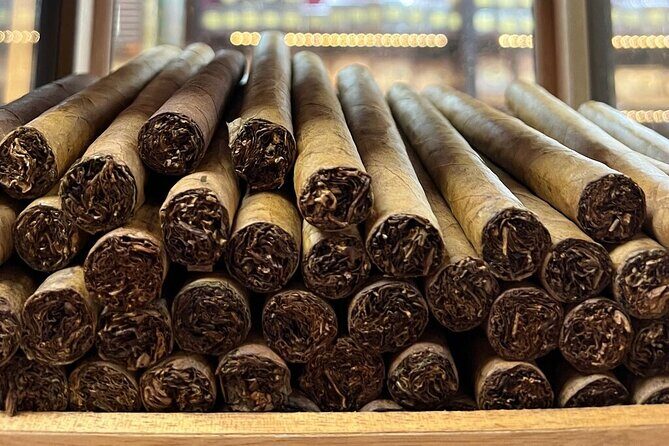
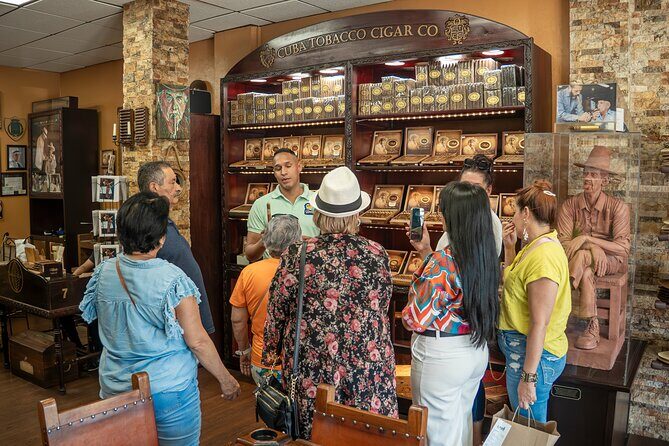
Next comes the cigar factory experience. The air changes the second you step in—tobacco scent, hands at work, and the steady rhythm of torcedores (cigar rollers). This stop is short, but it teaches you enough to make what you see later make sense.
During the demonstration, focus on the steps:
- How tobacco leaves get selected
- How cigars get rolled, bound, and finished by hand
- Why filler, binder, and wrapper leaves are different
- How cigars are aged and stored
If you’re used to thinking cigars are a single product, this is where the logic kicks in. You start to see cigars as construction: layered materials, controlled process, and time. It’s also where you can pick up hand-rolled cigars if you want something practical to bring home.
A small reality check: this stop is time-limited, so don’t expect a full factory tour. Instead, think of it as an educational show-and-tell—hands-on understanding in about 15 minutes.
Domino Park: Where Maximo Gomez Keeps the Conversation Going
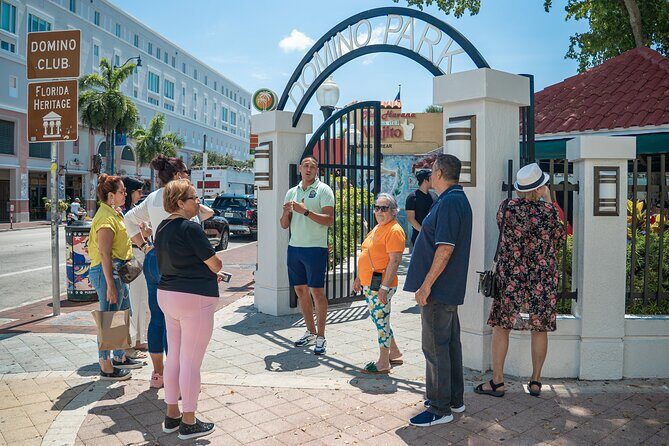
Domino Park is the heart of Little Havana, and it’s not just a pretty place to pause. It’s a community hub where people play dominos, trade stories, and debate politics. You’ll see active games, sometimes serious, sometimes funny, and the talk around the table is part of the show.
You’ll learn about:
- The park’s history and role in Cuban exile culture
- How it became a familiar gathering place over generations
- The namesake, Maximo Gomez, a Cuban independence hero
This stop can be a highlight because it feels alive in a way that museums can’t replicate. Murals, monuments, and constant conversation turn the area into a living timeline. It’s also a reminder that for many people, tradition isn’t something you schedule—it’s something you do.
The only potential drawback is simple: you might have to stand to watch games and listen. If you need constant seating, you may want to plan short pauses and keep your expectations flexible.
Bay of Pigs Monument: A Powerful Pause With Real Names
After the lively park energy, you go solemn. The Bay of Pigs Monument honors Cuban exiles who fought in the 1961 Bay of Pigs invasion, an attempt to liberate Cuba from Fidel Castro’s regime. This is the most reflective stop on the walk, and it deserves your full attention.
You’ll hear the story of Brigade 2506 and why the operation still matters emotionally and politically. The monument includes the names of the fallen engraved on it. That detail turns the history into people, not just dates.
This stop is about remembrance. In the middle of food and music, it gives you context for why Little Havana can feel so intense. If you’re quick to skip memorials when you travel, don’t do it here. Even a short stop gives you a much sharper read on the rest of the neighborhood.
Party Cake Bakery: Pastries, Cafecito, and the Daily Social Loop
Then you switch back to the sweet side. Party Cake Bakery is a long-running local institution where you can taste traditional Cuban pastries and enjoy strong cafecito.
You’ll have a chance to sample items like:
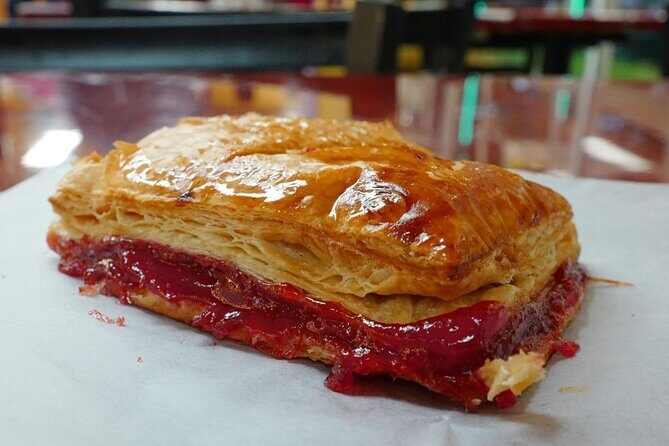
- Pastelitos de guayaba
- Croquetas
- Coffee or tea (as part of the tour inclusions)
The value here goes beyond flavor. Bakeries like this are social hubs, and you can feel it in the routine: locals popping in for a quick bite and conversation. If you only visit Little Havana’s major sights, you miss this daily rhythm.
One heads-up: this is a tasting stop, not a sit-down meal. If you’re hungry, treat the pastries as part of the plan, not as your whole dinner. The churro stop later helps balance things out.
Churromanía: A Tasty Break With Pick-Your-Topping Fun
Your next sweet detour is Churromanía, where churros come crisp and golden on the outside with a soft interior. The best part for me is that you get a break from walking and a chance to choose what you want.
You’ll be able to enjoy freshly made churros with fillings and toppings such as:
- Dulce de leche
- Nutella
- Chocolate
This stop is small but it works as a reset. After learning about craft and history, you’re letting yourself enjoy something simple and fast—street-food energy in a controlled, tour-friendly format. You also get to sit with the group for a moment, which helps you connect the earlier stops with the later ones.
Ball & Chain: From Jazz-Era Names to Cuban Music Nights
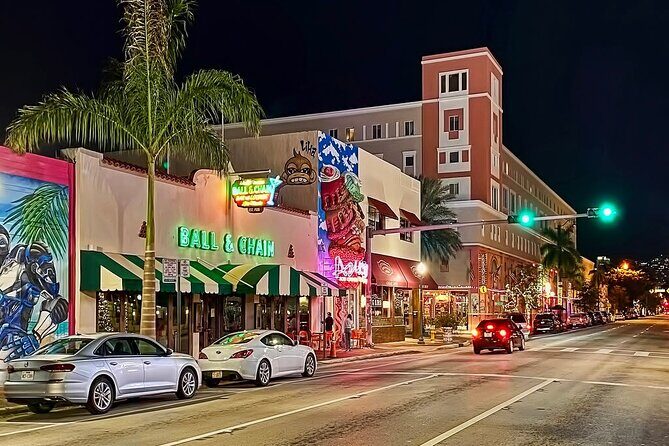
After the food stops, you head to Ball & Chain, one of Little Havana’s iconic venues. This is where history and nightlife mix under one roof. The venue opened in the 1930s and once hosted jazz greats like Billie Holiday, Chet Baker, and Count Basie.
Today, it keeps moving with live Cuban rhythms and salsa. You’ll get a chance to soak up the historic atmosphere and hear music either inside or sometimes in the outdoor patio area, depending on what’s happening that day.
You’ll also learn the story of how Ball & Chain went from jazz-era glory days to a revived cultural hotspot. Even if you don’t stay for a full night, this stop helps you understand why Calle Ocho isn’t only about daytime attractions.
Drinks are another practical point: you may have the option to sip a classic Cuban cocktail like a mojito or daiquiri, but alcoholic beverages aren’t included unless your specific tour setup says so. In most cases, plan on paying for any alcohol directly.
Calle Ocho Walk of Fame: Celia Cruz and the Stars Under Your Feet
To finish, you stroll along Calle Ocho and pass the Walk of Fame section—Little Havana’s tribute to major Latin music, film, and culture figures. It’s inspired by Hollywood’s version, but the feel is more personal because it’s rooted in Cuban-American pride right in the street.
You’ll see stars embedded in the sidewalk honoring people such as:
- Celia Cruz
- Gloria Estefan
- Julio Iglesias
You’ll also hear brief stories about some inductees and their connection to the culture of Calle Ocho. This is the stop where photos come easy, but the learning angle matters too. It turns the street into a map of influence instead of just a place to walk.
Price and Value: What $69.99 Buys You Here
$69.99 for about 2 hours 30 minutes is not the cheapest option, but it’s built for value in a few clear ways.
First, you’re getting more than walking. Several stops have built-in demonstrations and storytelling: guayabera craft, live cigar rolling, and community-focused local landmarks. Those moments take time and require specialists, so the price covers more than someone pointing at buildings.
Second, you get tangible inclusions: coffee or tea, Cuban pastries, and soda/pop guarapo. Then there’s the churro stop with a sweet break. If you’ve ever tried to build this same day on your own, it’s easy to spend more just on snacks and entrance fees without getting the context.
Third, admission tickets for each listed stop are shown as free, which helps you avoid surprise add-ons during the walk. The main things not included are gratuities and alcoholic drinks like mojitos.
So, if you want a guided day that mixes craft, food, and meaning, this price often feels fair.
Who Should Book (and Who Should Skip)
This tour fits you if you want:
- A short Little Havana overview that still teaches you something real
- Food tastings without doing planning math for each stop
- A mix of lively neighborhood moments and reflective history
You might look elsewhere if:
- You hate walking or standing for short stretches
- You want a long sit-down meal and unhurried time in just a couple places
- You prefer music and nightlife only, since history stops take part of the time
In my view, it’s also a strong choice for first-time visitors because it gives you a framework. Once you understand the meaning behind the guayabera, the cigar process, Domino Park, and the Bay of Pigs memorial, you can explore the rest of Calle Ocho with better instincts.
Should You Book This Little Havana Walking Tour?
If you like your travel days to have a backbone—food, yes, but also context—this is a smart book. The best part is how the itinerary connects symbols (shirts), craft (cigars), community (dominos), memory (Bay of Pigs), and street culture (Calle Ocho stars) without dragging out the day.
Book it if:
- You can handle a few short stops and some outdoor time
- You want guided tastings like Cuban pastries and churros, plus guarapo
- You want Ball & Chain as a culture stop, not just another bar
Don’t book it if you’re traveling with zero flexibility for weather or you only want one specific vibe. Otherwise, pack comfortable shoes, show up ready to eat, and let Little Havana do what it does best: talk with your senses.
FAQ
How much does the Little Havana Walking Tour cost?
The price is $69.99 per person.
How long is the tour?
It runs about 2 hours 30 minutes.
What language is the tour offered in?
The tour is offered in English.
What is included in the tour price?
You’ll get coffee and/or tea, Cuban pastries, and soda/pop guarapo.
Are alcoholic drinks included?
No. Mojitos and other alcoholic beverages are not included.
Where do I meet, and where does the tour end?
You meet at the Little Havana Visitor Center, 1600 SW 8th St, Miami, FL 33135. The tour ends back at the meeting point.
How large is the group?
This tour has a maximum of 30 travelers.
What happens if the weather is bad or I need to cancel?
The experience requires good weather. If it’s canceled due to poor weather, you’ll be offered a different date or a full refund. You can cancel for a full refund up to 24 hours in advance.
]]>My other big plus is the human factor: the guide-led storytelling makes the stops feel connected, not random plates on a sidewalk. You also get a small group cap (up to 15), which keeps the pace friendly instead of herding everyone along.
The only drawback to flag is simple: alcohol is not included. If you want beer, wine, or cocktails, you’ll be paying extra at most stops, so your final spend can climb.
Key highlights to look for
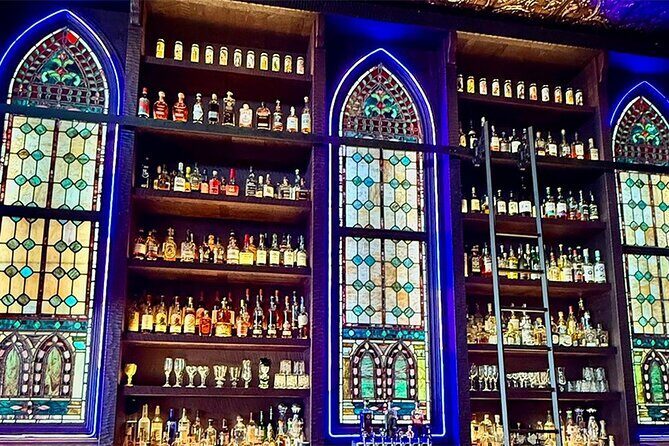
- Four planned stops on Las Olas with around 35 minutes at each place
- Guides Cindy and Andrea bring local context and stories that keep the food in focus
- International flavor run from Cajun-Creole heat to Italian pasta and a French-style dessert finish
- Small group size with a maximum of 15 people for a more relaxed experience
- Two appetizers, one Italian entree, and a French dessert are commonly described as the tasting flow
Las Olas Around the World: what you actually get in 3 hours
This is a walking food tour designed for one mission: leave full and a little smarter about what makes Fort Lauderdale’s Las Olas dining scene tick. You’re out for about 3 hours, moving between four stops all on Las Olas Boulevard. Each stop is scheduled for roughly 35 minutes, which is long enough to eat, listen, and still feel like you’re on a timeline that works.
The “around the world” part is not vague marketing. The cuisines rotate in a logical sequence: you start with Southern Cajun-Creole energy, move into a Mediterranean-influenced New American dish, then land on rustic Italian, and close at a European-style pâtisserie café for something sweet. That last stop matters more than people expect. It turns the tour from just a snack run into a proper meal arc: savory to hearty to dessert.
Meeting at Stranahan House and starting on time
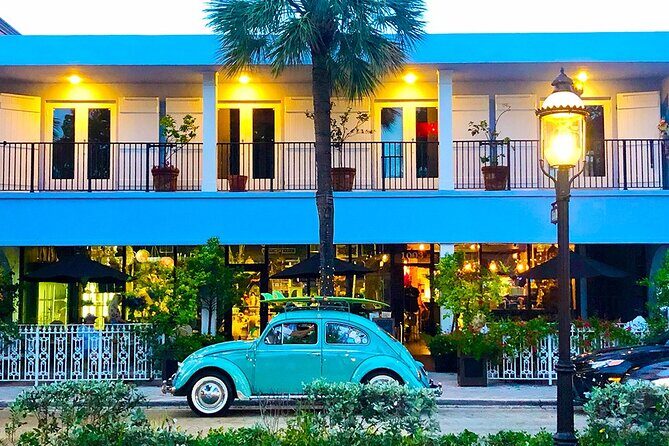
You meet at Historic Stranahan House Museum, 335 SE 6th Ave, Fort Lauderdale, FL 33301. The tour ends back at the same starting point, so you don’t have to think about transit at the end.
A couple practical perks help make this smoother:
- You get a mobile ticket.
- It runs in English.
- It is limited to 15 travelers max, so the group stays manageable.
- It is near public transportation, which helps if you’re not renting a car.
- Service animals are allowed, and the experience notes that most people can participate.
If you want this to feel effortless, plan for the walking. Even though one review described it as easy walking, you’ll still be on your feet for the full loop of stops.
Stop 1 on Las Olas: Cajun-Creole with a New Orleans vibe
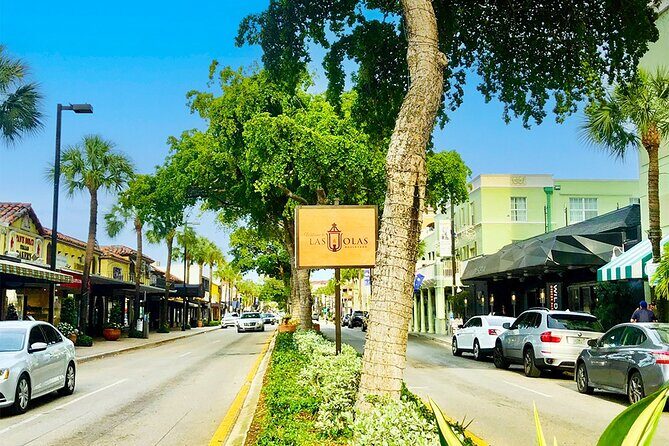
Your first taste is Cajun-Creole, positioned like a bold welcome. The idea here is that you set your palate early with flavors that hit hard: rich seasoning, crispy textures, and that warm spice profile people associate with New Orleans cooking.
What I like about starting here is that it gives you a reference point. After this stop, everything else feels like a comparison: what’s spicy and deep versus what’s bright and herby, what’s fried or crisp versus what’s sauced and comforting.
Consideration: if you’re sensitive to spice, this first stop is the one most likely to feel intense. You can still enjoy it, but it helps to go in knowing that the tour starts hot.
Stop 2: Mediterranean-influenced New American flavors
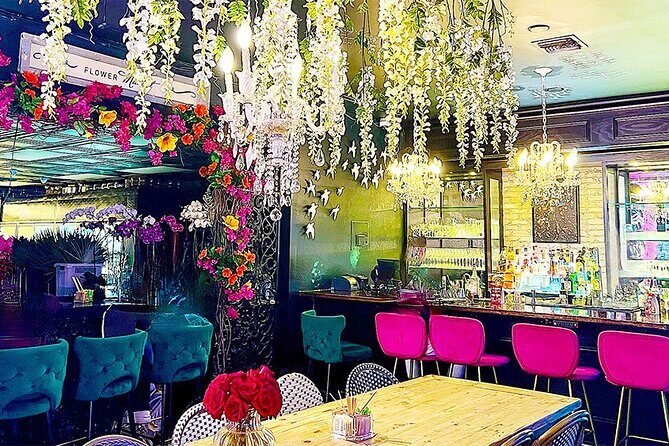
Next up is Mediterranean-influenced New American. The description suggests a modern setting and a dish that plays with spice and texture, with seasonal energy and a sustainability-minded approach. In plain terms, expect flavors that feel “global” without going too far into gimmick territory.
This stop also serves a purpose in the meal flow. After Cajun-Creole, the Mediterranean-influenced dish tends to feel more structured and varied. Think bright notes plus a few layers of savory complexity, rather than one single heavy flavor lane.
One more reason this stop works for value: it’s not just another filling plate. It is the kind of tasting that helps you notice technique—how a restaurant balances seasoning, how textures are built, and how sauces and sides work together.
Stop 3: Rustic Italian where the pasta is the star
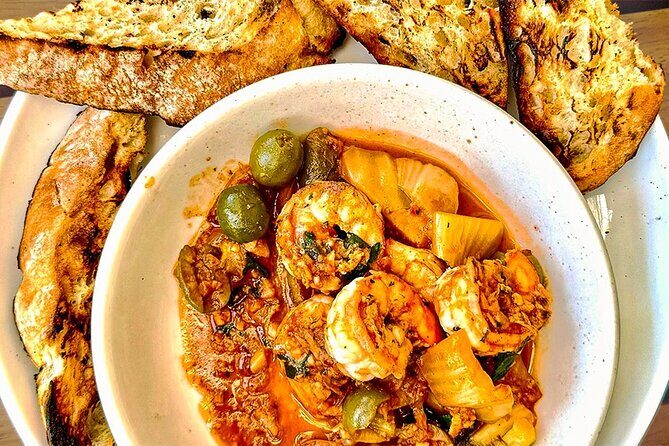
The third stop is rustic Italian, set in a trattoria-style atmosphere. This is where the tour shifts from variety to comfort food comfort. Handmade pasta is specifically part of the picture, and the whole vibe is described as warm, lively, and focused on traditional cooking with confidence.
If your taste runs to classic satisfaction, this is the stop you’ll probably talk about later. Reviews also point out that the Italian course often functions as the main meal moment within the tasting set, with some guests mentioning an Italian entree among the planned tastings.
Consideration: if you are already full from the first two stops, pace yourself in this room. The portioning is described as generous, but you’ll have to balance enjoyment with the fact that dessert is coming.
Stop 4 finale: European-style pâtisserie café sweetness
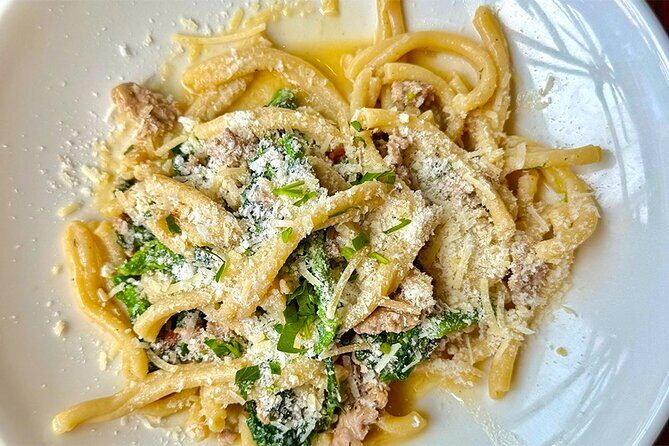
Your last stop is a European-style pâtisserie café, described with a garden-like, secret-corner feel—half café, half neighborhood favorite. This is where the tour dials the experience toward closure: dessert that pairs well with espresso, something you can slow down with, and a little elegance at the end of the walk.
The tour isn’t just about sugar either. It’s about contrast. After savory bites and hearty comfort, dessert gives you that final palate reset. A French dessert is specifically called out in one review, which aligns with the European café theme.
Consideration: if sweets are not your thing, this stop is still the scheduled finale. You can ask for guidance on the less-sweet options if they exist, but the core plan is dessert.
How the guided stories actually improve the tastings
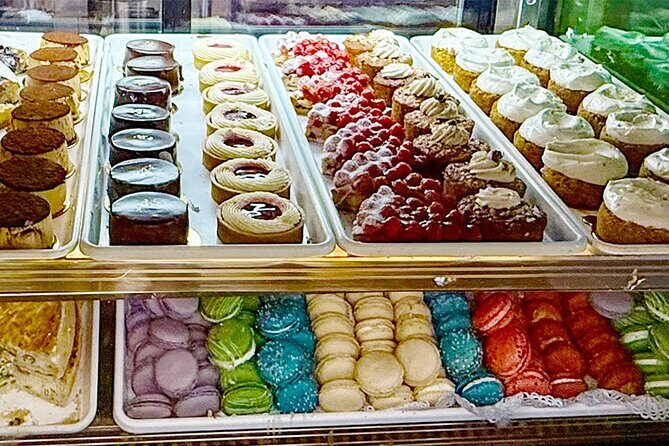
This is not a silent-food-tour situation. The guide role matters here because the experience is built around guided storytelling and a progression that connects flavor choices to places. Guides named Cindy and Andrea show up across multiple reviews, and they’re described as warm, engaging, and knowledgeable about local history and food locations.
What you get from that, in practical terms:
- You learn why a restaurant choice fits the theme of the stop, not just what you ate.
- You pick up small anecdotes that make each location feel part of Las Olas, instead of being a random stop on a map.
- The pace feels relaxed rather than rushed, which helps you actually taste and not just check boxes.
One review also emphasizes that the food presentation and pairing of food with libations can be part of the experience. Since alcohol is optional and paid separately, you can keep this strictly non-alcoholic—or add it if you’re in a celebratory mood.
Price and value: is $120 for a 3-hour tour fair?
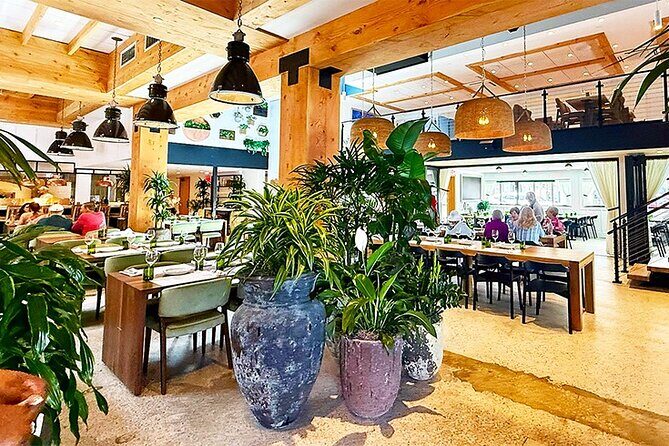
At $120 per person for about 3 hours with four stops, you’re paying for three things at once:
- Food tasting at multiple curated flavor points
- A guided progression with storytelling
- A small-group format capped at 15 travelers
The value question isn’t about whether you get one bite or a full meal. It is about whether the tour feels like a guided dining experience rather than a collection of quick samples. Multiple reviews highlight generous tastings and that people left happily full.
Also note what is and isn’t included. Alcohol is not included, though drinks are available for purchase at most stops. That means your base price is predictable, but your final total can change depending on how much you order.
Admission tickets at stops are described as free, and that matters because it keeps the experience focused on food and guide-led context instead of extra fees stacking up.
Who this tour fits best (and who might want a different plan)
This works especially well if you:
- Want a walkable food plan that does not require restaurant research
- Like the idea of trying multiple cuisines in one afternoon
- Appreciate guides who explain how places and food styles connect
It can also work for locals, not just first-time visitors. One review from a Florida resident suggests it was a smart way to see parts of town they would not have chosen alone, and that the pacing felt right.
You might consider a different style of outing if:
- You hate walking, even if it’s described as easy
- You strongly dislike spice, since the tour starts with Cajun-Creole
- You’re looking for a fully alcohol-inclusive experience, because drinks are purchase-only
Should you book the Fort Lauderdale Las Olas Around the World tour?
If you like the idea of four tastings, guided stories, and a finish that includes dessert, this tour is an easy yes. The strongest reason to book is the structure: Cajun-Creole → Mediterranean-leaning New American → rustic Italian → pâtisserie café, all on Las Olas, with enough time at each stop to actually enjoy what you’re eating.
I’d skip it only if you don’t want to pay extra for alcohol or you need a totally quiet, no-walking food experience. Otherwise, at $120 for a 3-hour guided run with multiple stops and generous tastings, this is the kind of plan that often saves you money and time compared with piecing together several restaurants on your own.
FAQ
How long is the Las Olas Around the World food tour?
It lasts about 3 hours.
How much does the tour cost?
The price is $120.00 per person.
Where does the tour start and end?
It starts at Historic Stranahan House Museum, 335 SE 6th Ave, Fort Lauderdale, FL 33301, and ends back at the same meeting point.
How many stops are included?
There are four stops, all on Las Olas Boulevard.
What cuisines do you try on the tour?
You’ll taste Cajun-Creole, Mediterranean-influenced New American, rustic Italian, and a European-style pâtisserie café dessert stop.
Are alcoholic drinks included?
Alcoholic beverages are not included, but alcoholic and soft drinks are available for purchase at most stops.
Is the tour in English?
Yes, the tour is offered in English.
What’s the group size limit?
The tour has a maximum of 15 travelers.
Is there free cancellation?
Yes. You can cancel for a full refund up to 24 hours before the experience start time.
]]>If you pick a language option, you’ll get a real live guide (English, French, or Spanish). Kenneth has been called out for speaking excellent French while keeping the pace moving, and you’ll get bottled water and coffee along the way. One thing to plan for: this is a walking tour in South Beach, so comfortable shoes and sun protection matter.
Key highlights at a glance
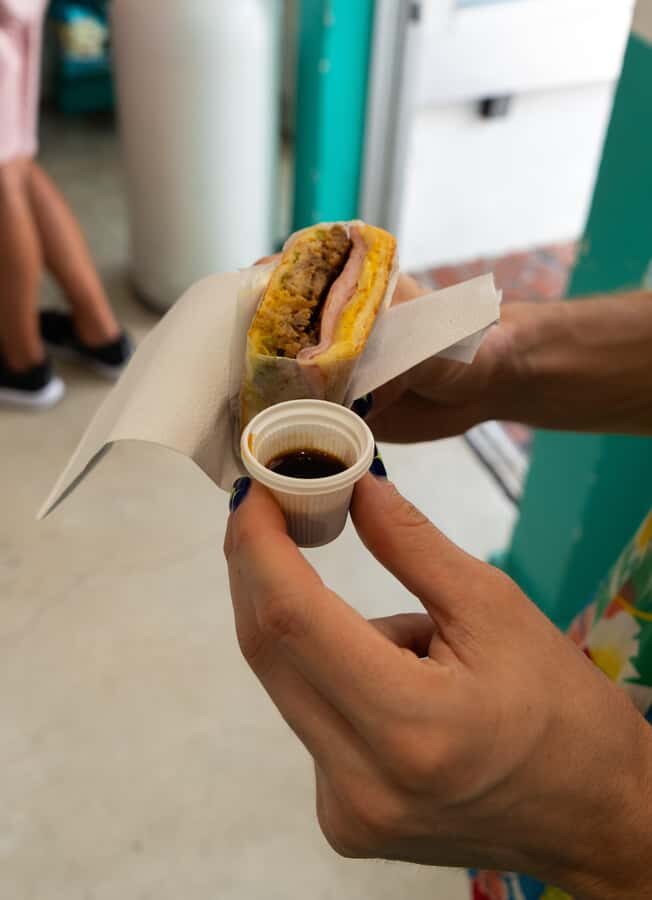
- Five tastings across five locally owned stops rather than a chain-filled “food sampler”
- A South Beach history and culture thread that connects the plates to the streets
- Live guide in English, French, and Spanish, which helps the stories land clearly
- Coffee and bottled water included, so you can focus on the food and not logistics
- Weather and walking pace matter, since you’ll be on your feet for about 150 minutes
South Beach Eats as a Mosaic of Miami
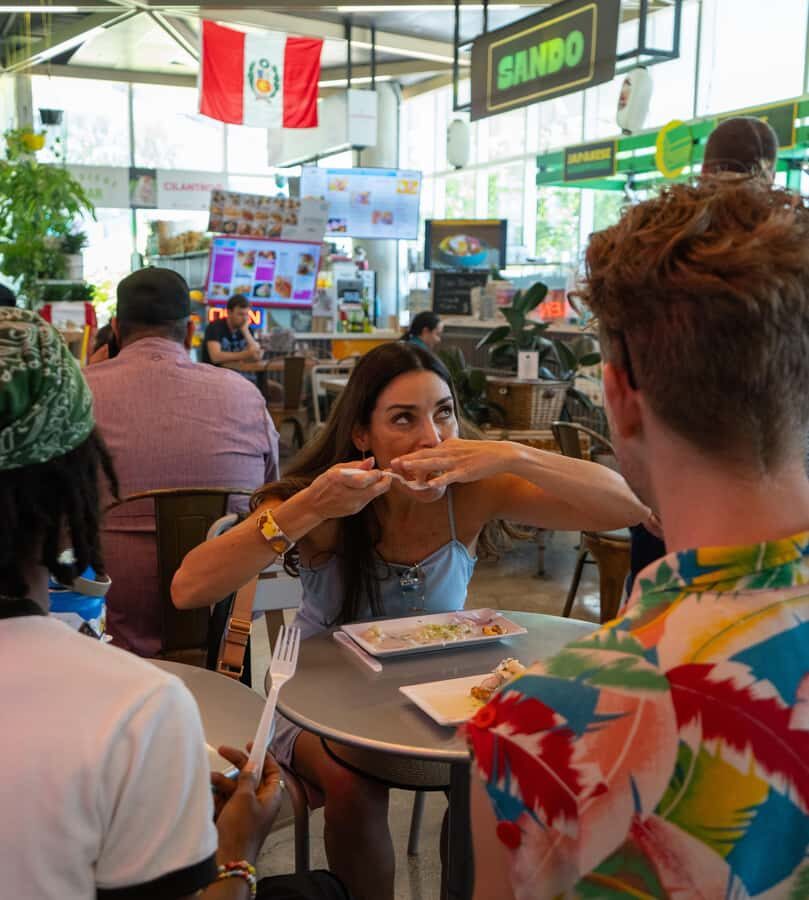
Miami is often described as a mix of everything. This tour uses a simpler idea you can feel: Miami as a mosaic, where different cultures show up in the food, the storefronts, and the street life around you.
The experience starts with an easy promise: you’ll eat. Not just one snack. You get five tastings, spread across locally owned restaurants. That’s the big value shift. When the stops are independent, the dishes tend to reflect the owners’ ideas and the neighborhood’s real tastes—not a corporate menu.
The second thing I like about this concept is the “why.” You’re guided through history and events that shaped South Beach, plus stories tied to immigrant influences and cultural landmarks. You’ll still enjoy the food, but you’ll also walk away with a sense of how Miami’s communities left fingerprints on what’s on the plate.
It’s a great choice if you want to experience South Beach beyond the obvious photos and postcard streets—while still keeping the pace relaxed and social.
The 927 Lincoln Rd start, then Michigan Ave finish
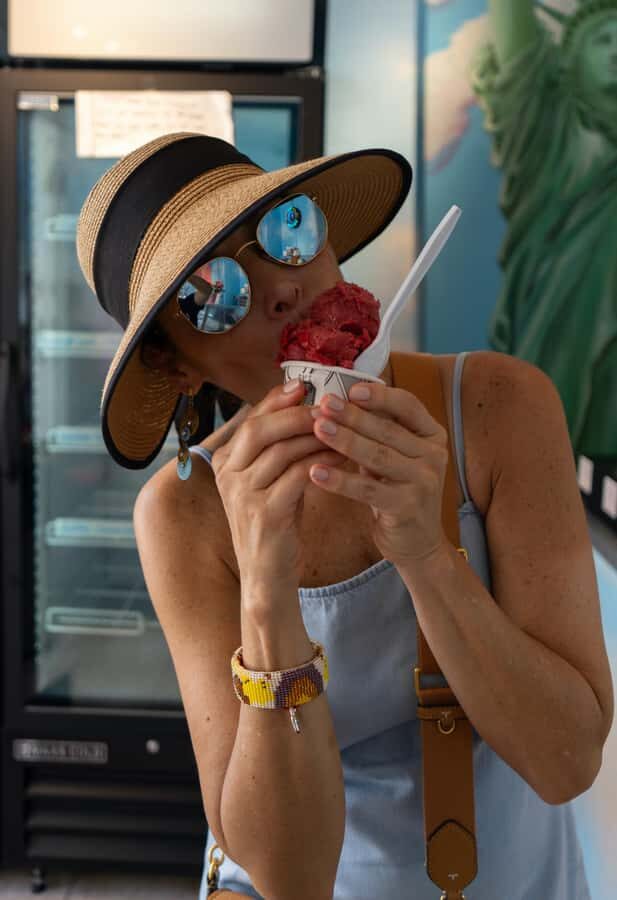
Before you worry about where you’re going, the tour gives you a clear starting target. Meet at 927 Lincoln Rd, at the Sterling Building. Look for the big central entrance, and your guide will be posted by the large menu.
The finish is just as important for your plans. You end at 1626 Michigan Ave, Miami Beach. That’s a helpful detail if you’re figuring out dinner right after. You’re not stranded at some random corner. You’re dropped in a walkable area where you can keep exploring.
This also affects the rhythm of the tour. When the route is designed to finish on Michigan Ave, it usually means you’re building momentum: you start with orientation and tastings, and you end with the last bite and a chance to reset before you branch out on your own.
Practical tip: take a minute before the tour starts to confirm you’re standing in the right entrance area of the Sterling Building. It’s a busy zone and it’s easy to drift a few feet in the wrong direction.
150 minutes on your feet: what to wear and how to pace it
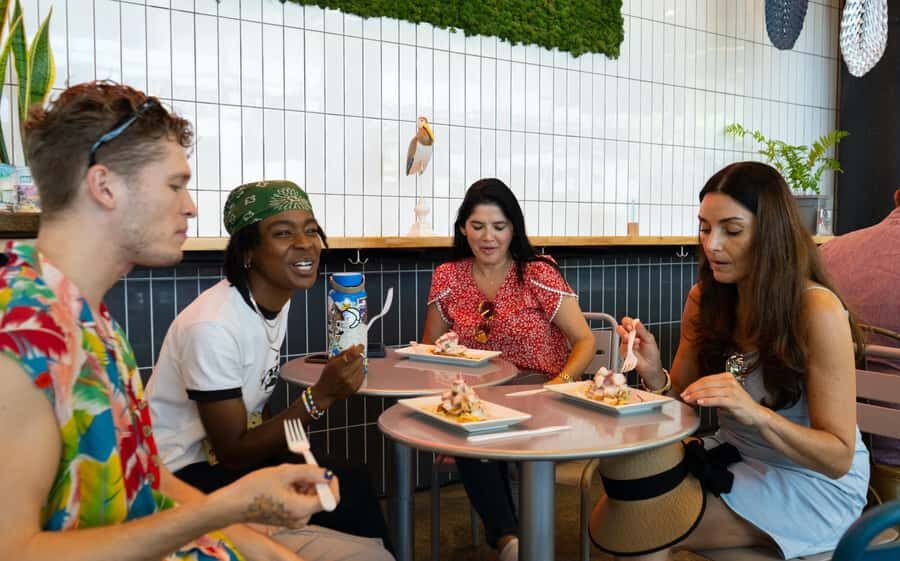
This experience is scheduled for about 150 minutes, and it’s a guided walking tour. That sounds obvious, but it’s the kind of detail that changes how much you’ll enjoy it. If you’re tired, hungry, or overheated, even great food can feel like work.
Come prepared like you’re doing an afternoon stroll that includes frequent stops. Wear comfortable walking shoes—not the pair you “break in later.” The tour also specifically asks you to bring a hat and sunscreen, and I agree. South Beach sun can be sharp.
You’ll also want to think about pacing. You’ll eat multiple times, so don’t arrive after a whole day of skipping meals. At the same time, avoid stuffing yourself right before the first tasting. The plan is a meal split across five locally owned eateries, meaning your stomach gets a series of steady hits rather than one huge blowout.
One small practical detail: the tour includes bottled water and coffee, which helps during the walk. But that doesn’t replace sunscreen or hydration habits. Drink water when it’s offered, then keep a steady rhythm until the last stop.
Stop 1: The Lincoln Eatery tasting
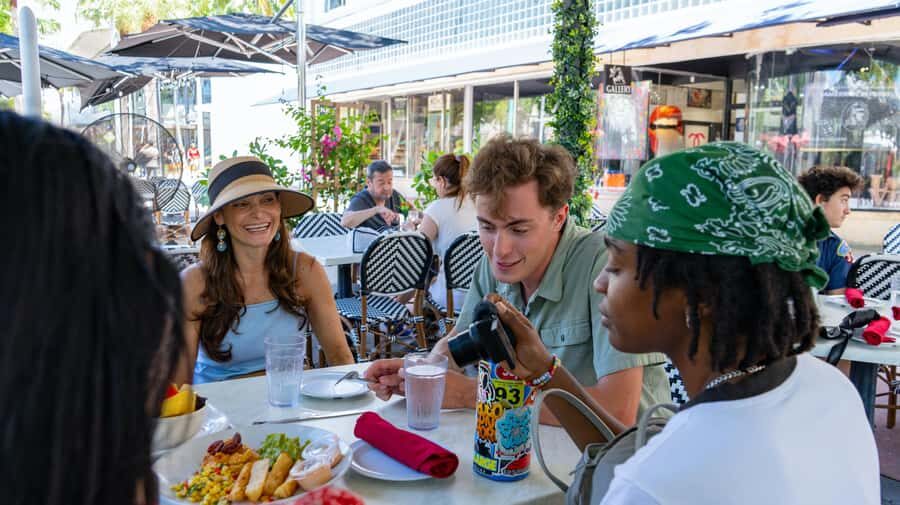
The route begins with a tasting at The Lincoln Eatery. This is your first “anchor” moment. You’ll start with food, and you’ll start with context—so you’re not eating blind. Your guide uses this early stop to set the tone for how Miami’s different culinary influences show up in South Beach.
A tasting at the first restaurant is also a smart design. It helps you settle in right away. You’re walking with a group, listening to stories, and then you hit flavors immediately. That’s how you keep energy up for the rest of the tour.
What to expect from this part is straightforward: food tasting (about 30 minutes) and an introduction to the kinds of flavors you’ll see repeatedly. Since the tour focuses on Latin American, Mediterranean, and modern cuisine, your first plate usually acts like a roadmap for what comes next.
Potential drawback? If you’re extremely sensitive to spice or you prefer very specific cuisines, this is where you’ll want to be proactive—ask questions during the tasting. The tour is food-forward, and it’s designed to show off variety, not keep every dish in your comfort zone.
Stop 2: A lesser-known South Beach restaurant bite
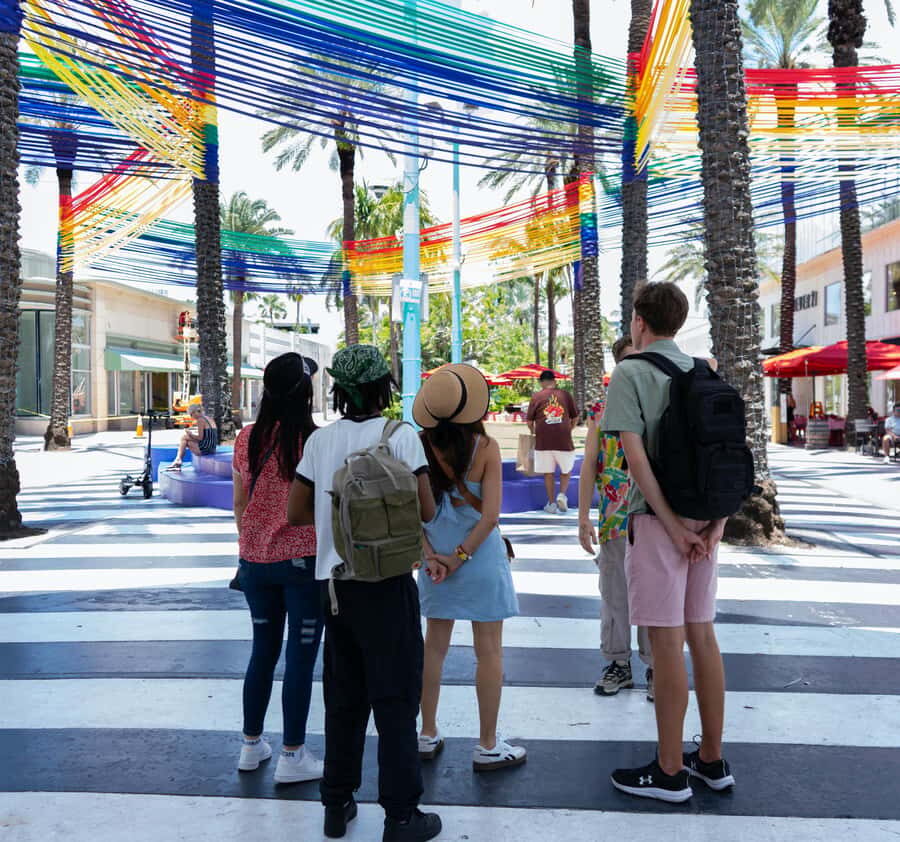
After the Lincoln Eatery, you’ll move to another locally owned spot for a second food tasting (about 30 minutes). This is one of the moments where the tour’s “mosaic” idea becomes real. Different neighborhoods in Miami develop their own food personalities, and South Beach isn’t only about trend or tourism.
This second restaurant stop is positioned as a “hidden” part of the route—less obvious than the main drags. Instead of feeling like you’re ticking tourist boxes, you get a chance to taste what local operators are doing with their menus.
Because the tour highlights a blend of Latin American, Mediterranean, and modern cuisines, you’re likely to see the menu style shift from stop to stop. That’s the point. You’re training your palate to recognize how cultures and chefs overlap in one small geography.
Here’s the practical way to get the most from this stop: slow down just a bit, and pay attention to texture and ingredients, not just taste. When your guide explains the neighborhood connections, those details become the takeaway. You’ll remember the flavors longer because you have a story attached to them.
Española Way: a short pass, then back to eating
You also spend a short (about 15 minutes) segment passing by Española Way. This part is not about a full tasting. It’s about seeing a landmark in motion—like a quick visual palate cleanser between restaurants.
Why include a pass-by section at all? Because it keeps the tour from turning into a pure restaurant crawl. You’re still experiencing the streetscape, and your guide gives cultural and historical insights along the way. Even a brief look can help you “place” what you ate earlier.
You might use this moment to take photos, catch your breath, and get oriented again before the last set of bites. If you’re the type who likes to understand a neighborhood by walking it, that 15-minute window helps.
Just be aware that pass-by stops tend to be quick. If you want extended wandering, you’ll need to add that on after the tour. This portion exists to add meaning, not to replace your own free time.
The final restaurant on Michigan Ave: snacks, tasting, and coffee reset
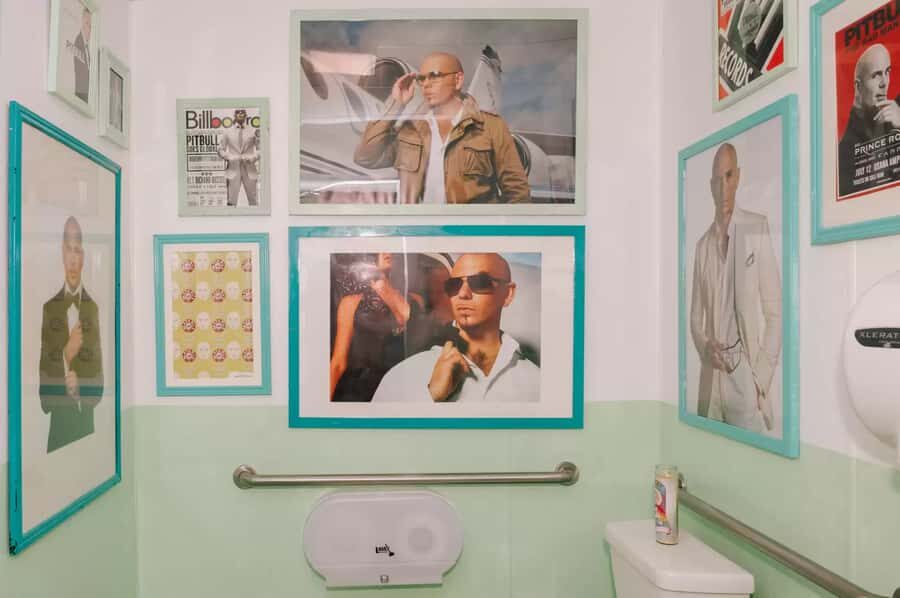
The last tasting block is at another local restaurant, with local snacks plus a food tasting (about 30 minutes). This is where you’ll likely feel the momentum of the earlier stops. By now you know the tour rhythm: walk, hear the story, eat, and repeat.
Since the tour includes coffee, the last part is also a nice way to end on a comfortable note. Coffee doesn’t just perk you up. It also gives you a moment to slow down mentally after eating. You can reflect on what you’ve tasted, and what you now understand about the neighborhood behind it.
The finish point—1626 Michigan Ave—matters here. When your tour ends at a clear address, you can plan dinner without guessing. It’s easier to turn the “last bite” into a full night out.
One more practical angle: alcohol is not included. That’s good if you want to stay sharp and keep walking comfortably to the end. But it’s worth noting if you were hoping for a paired drink. You’ll be sticking with the included water and coffee, and you can always add a drink later on your own terms.
What the guide really adds (and why locals-owned stops matter)
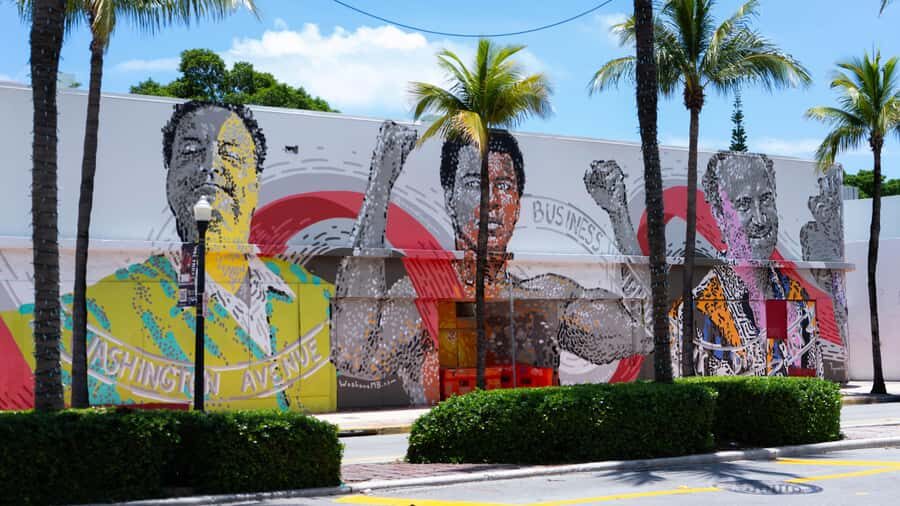
The guide is the engine of this tour. You’re getting more than restaurant names and tasting portions. You’re getting a spoken thread that ties Miami’s food to its people—immigrant influences, cultural landmarks, and the events that shaped South Beach.
That’s why the focus on 100% locally owned restaurants is so important. Chain restaurants can still be tasty, but they don’t carry neighborhood fingerprints the same way. Locally owned places usually have tighter connections to the community, and that connection shows up in the menu choices and the chef or owner’s style.
You’ll also appreciate that the tour avoids the “only corporate spots” feel. It gives you a chance to see what Miami tastes like when it’s not trying to be the same everywhere.
One guide detail that stands out from real-world experience: in French-language groups, Kenneth has been praised for speaking excellent French while keeping the information clear and the group moving. Even if you’re not on the French tour, the point is the same—this isn’t a silent tasting. It’s a guided walk where questions make sense.
Also, some groups have been able to catch a relaxed view from an outside rooftop bar area during the tour. That kind of pause turns the experience from purely “food stops” into a more memory-making neighborhood walk.
Price and food value: is $75 a good deal?
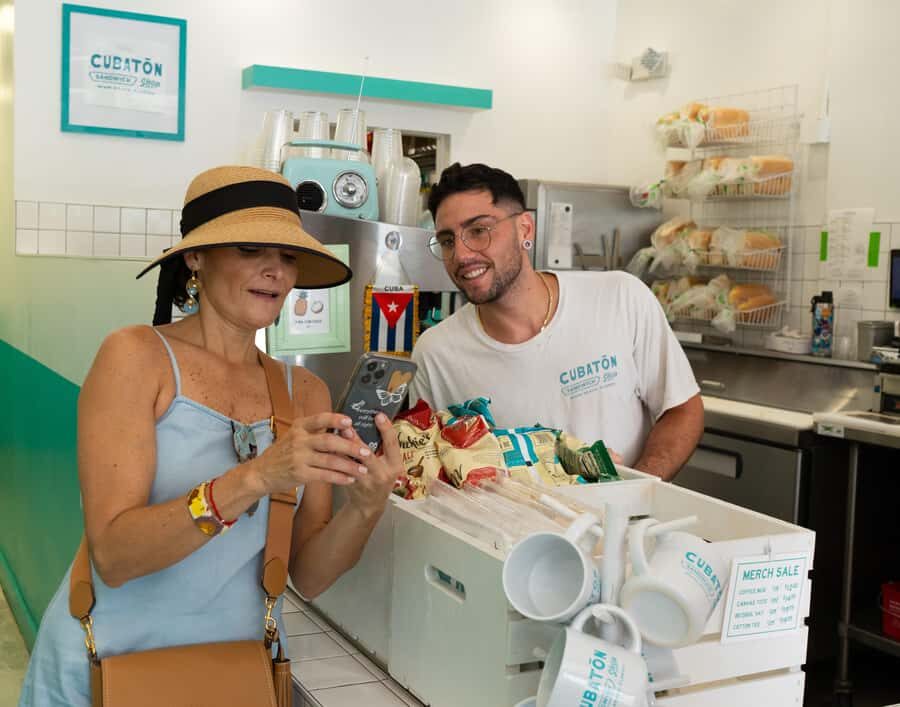
At $75 per person for 150 minutes, you’re paying for three things at once: the guide, the walking route, and multiple restaurant tastings.
If you tried to copy this on your own, you’d likely spend more than you think:
- You’d have to research and choose restaurants.
- You’d still want someone to explain the neighborhood links.
- You’d pay for several separate meals without getting the same “this connects to that” storytelling.
Here, the tastings act like meal components spread across the route. The experience is designed so you leave satisfied, not just sampling. Plus, bottled water and coffee are included, which offsets the small costs that add up during a walking afternoon.
The main value trade-off is your time and attention. This is not a quick drive-by. It’s a guided walk, so you’ll be standing in sun, listening, and eating multiple times. If you love that style of travel—learning by moving and tasting—$75 can feel fair.
If you only want one big meal or you don’t enjoy walking in South Beach heat, then you might feel like the cost is too high for what you personally care about.
Who should book this Miami Mosaic food tour
This is a strong match if:
- You’re in South Beach for the first time and want an efficient food-and-stories introduction
- You like locally owned restaurants and want to avoid chain-heavy outings
- You want variety across Latin American, Mediterranean, and modern cuisine
- You value a guide-led explanation of how neighborhoods evolve
It may not be a great fit if:
- You dislike walking for 150 minutes
- You’re traveling with anyone under 8 years (the tour isn’t suitable for children under 8)
- You specifically want alcohol included (it’s not part of the package)
It’s also a good option for people who want a social, guided experience but still want to explore independently afterward. The end point on Michigan Ave makes it easy to continue the evening at your own pace.
Book or skip: my practical recommendation
I’d book this if you want a South Beach experience that’s more than a restaurant list. The five tastings at locally owned places, combined with the neighborhood storytelling, gives you a satisfying afternoon and a clearer sense of Miami’s cultural blend.
Skip it if walking in sun is a hard no for you, or if you want a drink-focused outing. This is food and story first, with water and coffee doing the supporting work.
If you do book, come prepared: comfortable shoes, plus a hat and sunscreen. And keep your expectations realistic. This is a walking tour with multiple stops, so the payoff is in the steady rhythm—eat, learn, look around, repeat.
FAQ
FAQ
How long is the Miami Mosaic Signature Food Tour?
It runs for about 150 minutes.
How much does the tour cost?
The price is $75 per person.
What food is included on the tour?
You’ll have five tastings across five locally owned eateries, with the meal split between them. Bottled water and coffee are included as well.
Is alcohol included?
No. Alcoholic beverages are not included.
Where do I meet the guide?
Meet at 927 Lincoln Rd. Look for the Sterling Building, then the big central entrance. Your guide will stand by the big menu.
Where does the tour end?
The tour finishes at 1626 Michigan Ave, Miami Beach, FL 33139.
What languages are available for the live guide?
The live tour guide is available in English, French, and Spanish.
Is the tour wheelchair accessible?
Yes, the tour is wheelchair accessible.
What should I bring?
Wear comfortable walking shoes, and bring a hat and sunscreen. A camera is also recommended.
Is it suitable for children?
The tour is not suitable for children under 8 years old.
]]>I especially like the all-inclusive food and drink, including hors d’oeuvres and an ever-changing wine selection, plus both imported and domestic beers. I also like that the boat is kept comfortable with an air-conditioned cabin and real outside seating for photos.
One thing to consider: there’s no hotel pickup or drop-off, so you’ll need to get yourself to the marina meeting point on time. Also, if you’re picky about food details, keep expectations on the “nice hors d’oeuvres” side rather than full-on dining.
Key Things to Know Before You Go
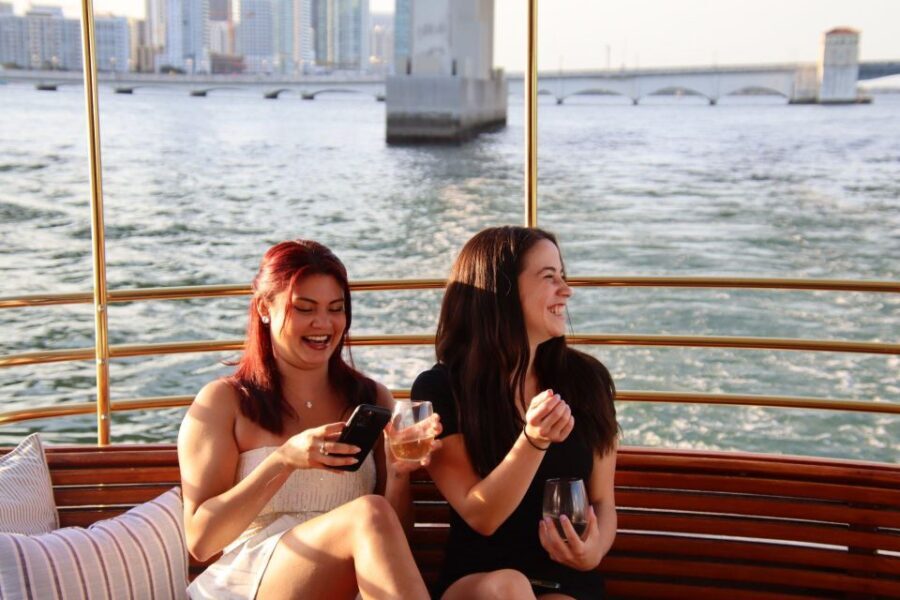
- Small boat setting (up to 20 passengers) that feels personal, not crowded
- All-inclusive beer, wine, and prepared hors d’oeuvres timed to keep you snacking during the best light
- First stop: the Venetian Islands celebrity-home stretch for quick, camera-friendly eye candy
- Golden hour over the Miami skyline as the light shifts toward sunset
- Biscayne Bay cruise with James Deering’s 1916 Christmas arrival story adding meaning to the route
- Air-conditioned cabin plus outside seating, so you can choose comfort or views
Setting Off From Miami Beach Marina to the Venetian Islands
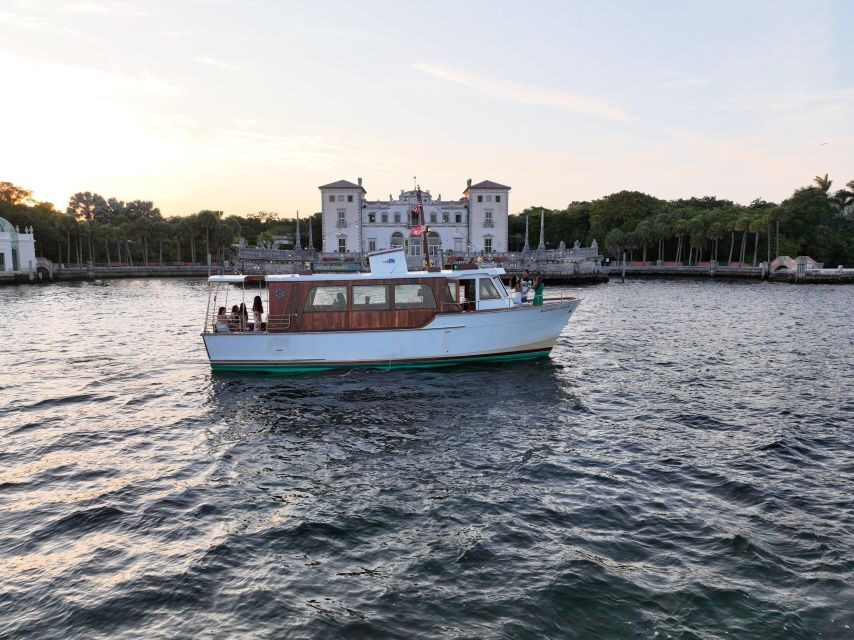
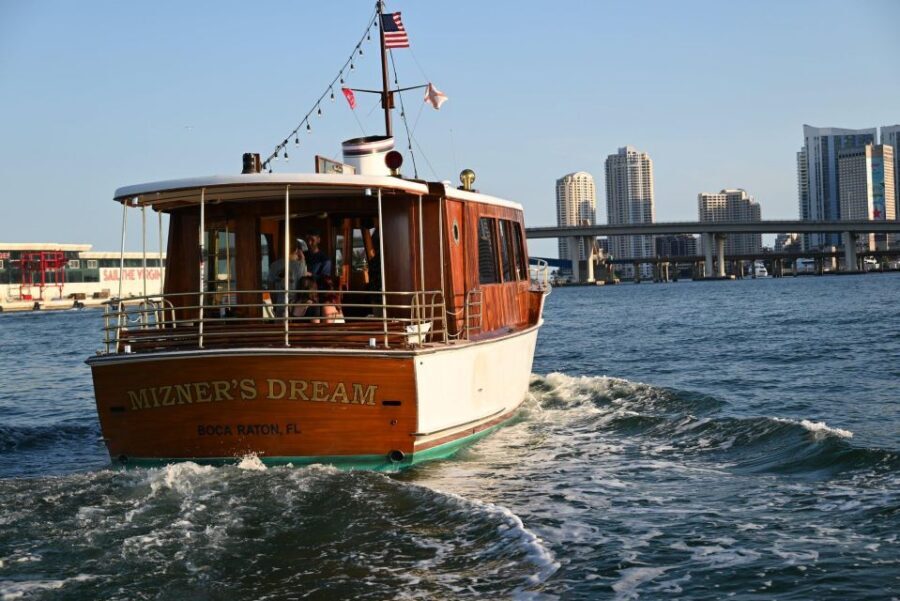
You start at the Miami Beach Marina, meeting at the office in front of Pier A. Once you’re aboard, the vibe is instantly “slow and scenic.” This is not a speed run. It’s a vintage-style cruising experience that gives you time to look, listen, and settle into the view.
The early cruising route focuses on the Venetian Islands waterfront—where large homes line the waterway and waterfront luxury shows up in full view. Even if you don’t know the owners (and you don’t need to), you’ll still enjoy the pattern: grand facades, carefully placed docks, and that distinctive “Miami waterfront” feel. It’s also the part of the trip where you get your bearings, since you’re moving through a landscape that’s easy to read from the water.
This first stretch is a smart way to start the evening. Light and angle are usually forgiving early on, so you’ll likely get your best photos before the sun gets lower and the contrast gets stronger.
The All-Inclusive Food and Drink Moment You’ll Actually Use
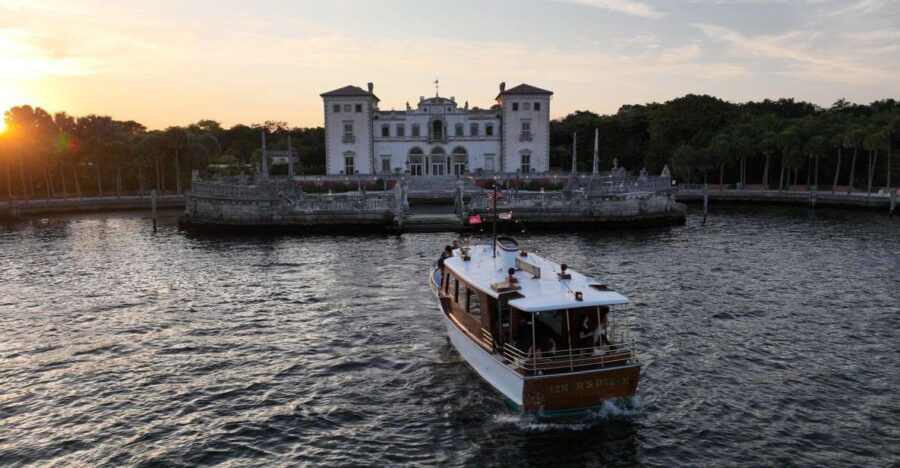
One of the most practical perks here is that food and drinks aren’t an afterthought. You get all-inclusive beer, wine, and prepared hors d’oeuvres, with wine that’s described as an ever-changing selection. That matters because a sunset cruise lives or dies on pacing. When you’re not thinking about buying drinks or hunting for snacks, you’re free to enjoy the skyline as it shifts.
You’ll also find both imported and domestic beers, which is helpful if your group doesn’t all have the same taste in wine. The hors d’oeuvres are specifically prepared to pair with the drinks, so it’s not the usual “here’s some chips” situation.
A small but real tip: eat lightly early, then save room for the main snack window as the boat turns and the skyline starts to glow. You’ll be outside more when the light gets good, and having food and drink already handled makes it easier to stay in that sweet spot for photos.
Golden Hour Over Biscayne Bay and the Miami Skyline
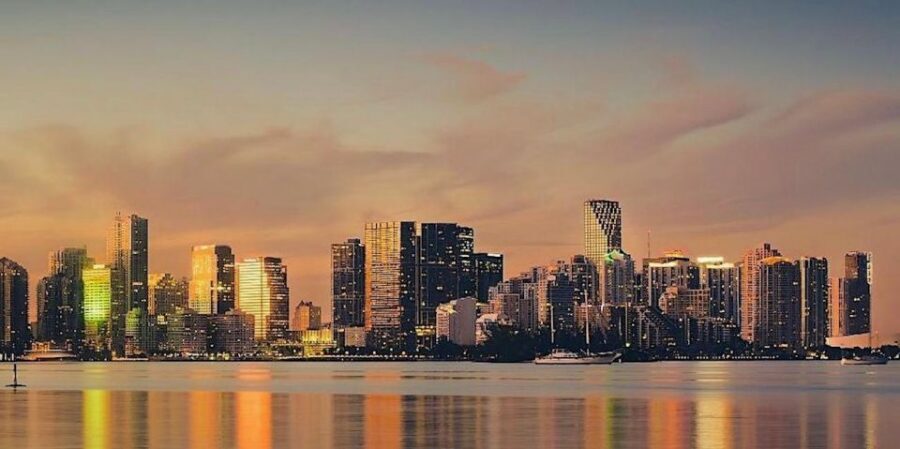
As the sunset approaches, the cruise leans into what you came for: a Miami skyline panorama at golden hour. The view from the water has a different feel than street-level photos. Buildings look taller, and the skyline feels layered—especially once the sky starts shifting from bright to warm.
This is the part where your seat choice matters. If you like photos, spend time on the outside seating whenever you can. If it gets cooler or you just want to relax, you can retreat to the air-conditioned cabin without losing the overall experience. The layout makes it possible to bounce between comfort and view.
You’ll also notice the water changes the soundscape. Wind and water movement are constant, and that gentle rhythm is part of why these cruises feel relaxing. It’s less about “doing” something and more about letting Miami unfold around you.
A Route With Meaning: Retracing James Deering’s 1916 Arrival
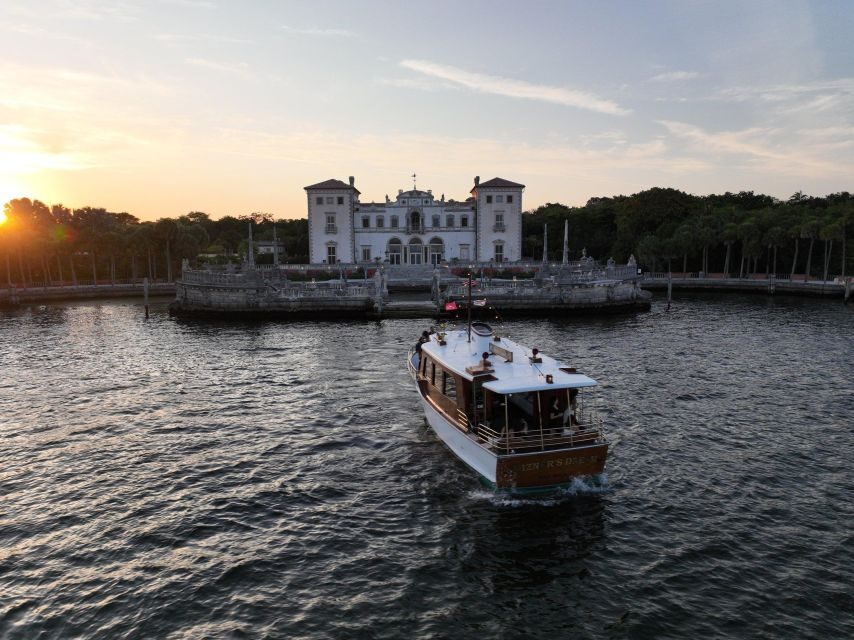
The cruise doesn’t treat Vizcaya like a random destination stop. It ties the journey to a story: your sailing route retraces James Deering’s arrival at Vizcaya on Christmas Day in 1916. That historical frame is more than trivia. It changes how you see the shoreline—because you’re not just passing scenery, you’re traveling a remembered route.
Even if you’ve never studied Vizcaya before, the story gives the trip a reason to slow down. When the boat heads toward open waters of Biscayne Bay and then toward Vizcaya, you’re moving along a line that connects luxury, place, and time.
This is one reason I think the cruise works well for people who like architecture and history without wanting a museum-style experience. You get context while you’re still enjoying the scenery, and the story lands because it’s tied to the route you’re taking.
Comfort on a Small Intimate Boat: Outside Seats and AC

This is an intimate cruise on a small boat for up to 20 passengers. That size is a big deal. You don’t feel like you’re packed in, and staff can keep an eye on the whole group more easily. It also means the experience feels more flexible—less like following a conveyor belt.
You have outside seating for views, plus an air-conditioned cabin for when you want shade, warmth, or a break from the breeze. In a coastal city, that flexibility matters. Some evenings you’ll want to stay out the whole time. Other evenings you’ll want to cool down for a bit.
Based on what people have said about the onboard setup, the cabin is functional and comfortable, but some thought the boat interior could be updated. What that means for you: don’t expect a brand-new look. Do expect a smooth, calm ride and the kind of comfort that keeps you enjoying the scenery instead of fussing over it.
Getting to Vizcaya and Making the Most of Your Time
Once you arrive at Vizcaya, you’ll have time to explore the area and take in the luxury, history, and scenic beauty that made it one of Miami’s top sights. The cruise presents Vizcaya as the culminating moment, not just a quick drop-off.
Because the provided timing focuses on the total cruise duration (2 hours), you should treat the Vizcaya portion as a short, scenic visit rather than a full-day exploration. Plan to move at a relaxed walking pace, pick a couple of photo angles you care about, and use your time to enjoy the change from open water back to estate atmosphere.
If you’re the type who loves seeing how a place looks from different vantage points, you’ll likely enjoy the contrast here: first the water gives you perspective on the surrounding shoreline, then the Vizcaya stop gives you a closer look at the site itself.
Price and Value: What $130 Covers for 2 Hours
At $130 per person for a 2-hour cruise, this isn’t a budget activity. But it’s also not just a “seat on a boat” price tag.
Here’s what you’re paying for in practical terms:
- A small boat experience (up to 20 passengers)
- All-inclusive beer, wine, and food, including prepared hors d’oeuvres
- An experienced captain and a professional bilingual guide
- Air-conditioned cabin and outside seating
- A route designed around both the skyline and Vizcaya approach, including the James Deering story
So the value comes from reducing friction. You don’t have to decide what to order, worry about additional costs for drinks, or sacrifice time hunting for something to snack on. For an evening activity where timing matters, that convenience is worth real money.
One more value point: you’re getting multiple “scene types” in one trip—celebrity-home waterfront views, skyline at golden hour, then a destination stop at Vizcaya—without switching vehicles or handling separate tickets.
Who Should Book This Miami Sunset Cruise
This is a great match if you want Miami at its scenic best and you’d like a guided experience that doesn’t feel too formal.
It’s especially suited for:
- Adults who want a relaxed evening with food, drinks, and skyline photos
- Couples or small groups who prefer a small-boat vibe
- People interested in Miami’s signature waterfront and the story connected to James Deering and Vizcaya
It’s not ideal for kids under 14, since the experience is not suitable for children under 14. If you’re traveling with younger kids, you’ll want to look for different family-friendly options.
Should You Book It? My Decision Checklist
I’d book this if you want a two-hour evening plan that’s simple, scenic, and already includes the parts that usually cost extra. The combination of Venetian Islands views, golden hour skyline, and a Vizcaya stop tied to Deering’s 1916 arrival makes the route feel more purposeful than a generic sunset cruise.
I’d think twice if any of these are true for you:
- You strongly need hotel pickup or you don’t want to handle your own arrival logistics (since there’s no hotel pickup/drop-off)
- You expect a full meal experience rather than prepared hors d’oeuvres
- You’re sensitive to the idea that some parts of the boat interior may not be brand-new
If you’re flexible and you like being on the water, this is the kind of Miami night that feels easy to love.
FAQ
How long is the Miami Beach to Vizcaya sunset cruise?
The tour lasts 2 hours.
What is the price per person?
It costs $130 per person.
Is food included?
Yes. The cruise includes all-inclusive food, with specifically prepared hors d’oeuvres.
Are drinks included?
Yes. Beer and wine are included (with a wine selection and both imported and domestic beers).
How many people are on the boat?
The cruise uses a small intimate boat that holds up to 20 passengers.
Is there an air-conditioned area onboard?
Yes. There is an air-conditioned cabin, plus outside seating.
Is there a live guide?
Yes. There is a professional bilingual guide, and the live tour guide is English.
Do I need hotel pickup?
No. Hotel pickup and drop-off are not included.
Where is the meeting point?
Meet at the office in front of Pier A in the Miami Beach Marina.
Is the cruise suitable for children?
No. It is not suitable for children under 14.
FAQ
Can I get a full refund if I cancel?
Yes. You can cancel up to 24 hours in advance for a full refund.
Is the cruise only for English speakers?
The live guide operates in English, and the guide is listed as professional bilingual.
Where does the cruise travel before reaching Vizcaya?
You cruise toward Vizcaya after enjoying the Venetian Islands and the Miami skyline during golden hour, then you head into Biscayne Bay.
Is there outside seating for photos?
Yes. There is outside seating available during the cruise.
]]>I especially like the food-to-story flow. The stops move from a classic Key West breakfast (iced coffee and fresh baked cake) to Cuban cuisine, then to a true secret dish, plus conch fritters, rum tasting, and a chocolate-dipped Key lime pie finish. One possible drawback: the depth of the local history depends on your guide, so if you’re a history junkie, you may want to ask questions and steer the conversation.
Key West Secret Walking Food Tour: the main reasons it works
- Small group (max 10) keeps things chatty, not rushed
- Food included means you can plan your meals around the tour and stop guessing where to eat
- A real local guide shares culture, architecture, and food context (guides like Kitty, Megan, Brad, and John have led groups)
- Old Town pacing with breaks helps in Key West heat and humidity
- Multiple “wow” tastes: Cuban cuisine, conch fritters, rum tasting, and chocolate-dipped Key lime pie
Finding your group: Doing Work Coffee on Duval Street
Your tour meets at Doing Work Coffee, 335 Duval St. It’s right in the action, but the plan is not to stay stuck on the busiest stretch. The guide will be easy to spot with an orange umbrella, so you won’t need to play guessing games.
Try to arrive about 5 minutes early. You’ll get time to settle in, use the restroom if you need it, and get ready to walk without feeling behind.
3 hours of walking food, built for a small group
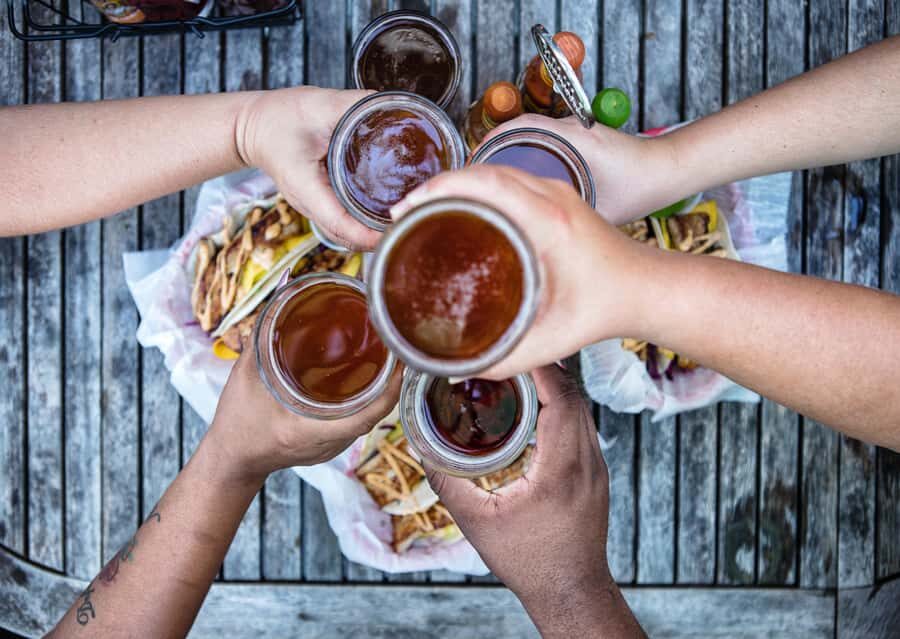
This is a 3-hour walking tour, usually offered in the morning and afternoon. The group is capped at 10 people, which matters more than it sounds. With fewer people, the guide can actually manage pacing, answer questions, and keep the group together without turning every stop into a sprint.
You’ll also want to plan for Key West weather. Even with rest stops built into the experience, one of the best practical tips I can give is to bring your own bottle of water. The tour includes water, but extra hydration is just smart in hot, humid Florida.
Stop 1: iced coffee and local fresh baked cake to start like a local
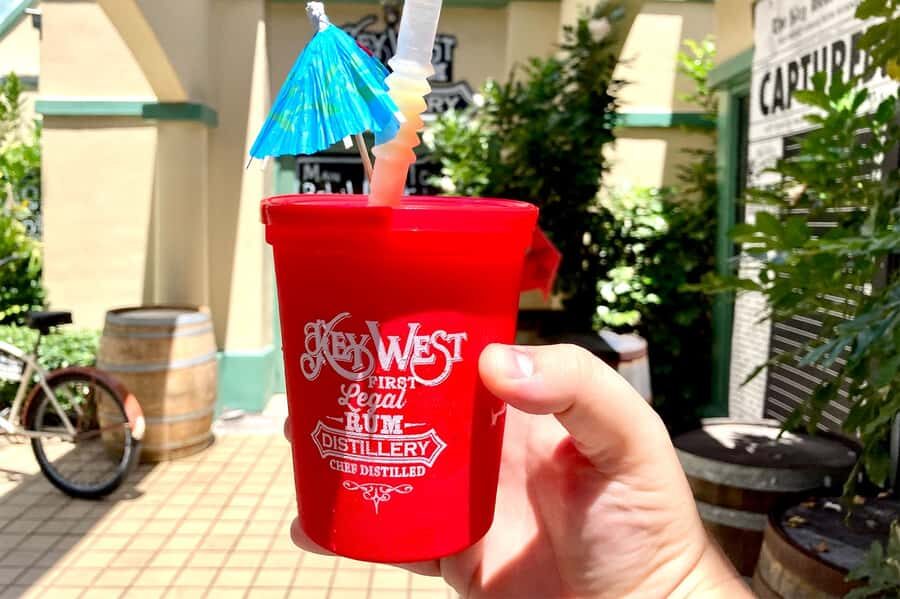
The tour kicks off with a classic Key West breakfast: iced coffee and local fresh baked cake. Starting with something light-and-sweet does two things. First, it helps you cool down early (iced coffee is a good match for the heat). Second, it puts you in the right mindset for the rest of the walk: you’re eating local flavors, not just getting a snack here and there.
This first stop also sets the tone for the guide’s storytelling. You’re not only being fed; you’re being given context for what you’re about to try.
Duval Street stroll to Cuban cuisine: Caribbean influence you can taste
Next, you’ll wander down Duval Street toward a local haunt for the island’s Cuban cuisine. Duval is busy, sure, but the tour uses it as a starting point rather than the finish line. You’re walking with a purpose: to connect Key West food culture to the wider Caribbean mix.
What to expect here is comfort-food energy. Cuban cuisine in Key West often leans into bold flavors, hearty portions, and a “come back for seconds” kind of vibe. Some groups also mention Cuban-style bites like Cuban bagels as part of this stop, so if you like savory breakfast options, this is a good moment to pay attention.
The secret dish: what you’ll get and why it’s fun
Then comes the part the tour is named for: the Secret Dish. The idea is simple and effective—one stop where you don’t fully know what’s coming, and the guide handles the ordering and context.
Because menus can vary, you might see different kinds of treats here. In some group experiences, the secret dish has been described as something like wings, and other times it’s connected to Caribbean comfort plates. The common thread is that this stop is meant to feel special, not like a random side quest.
If you’re a foodie who likes surprises, this is where the tour feels most like a secret club.
Rum tasting from one of Key West’s oldest distilleries
After the hearty savory stops, you’ll cool down with a rum tasting from one of the oldest distilleries in Key West. Even if you don’t consider yourself a big alcohol person, a tasting is usually more educational than a drink-and-stumble moment.
This is a smart pivot for the route. The day keeps moving, but the focus shifts from food texture to flavor notes—sweetness, spice, and what makes Key West rum culture distinct.
Also, if you’re the type who wants more than the base tasting, there are alcohol upgrades available. The tour itself includes the rum tasting, plus water.
Conch fritters: crunchy, local, and easy to love
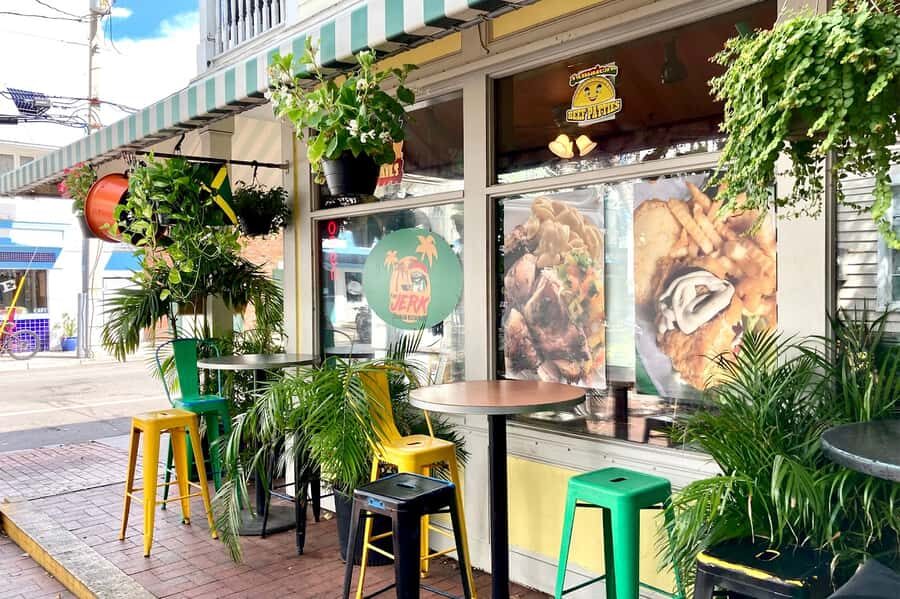
Then you’ll indulge in conch fritters. This is one of those “only-in-the-Keys” foods that feels both casual and iconic. You get that crisp outside, tender inside, and a flavor profile that’s unmistakably tied to the region.
The best part of conch fritters on a walking tour: they’re filling without being heavy. You can keep moving, enjoy the next stop, and not spend the last hour feeling like you need to lie down on a bench.
Chocolate-dipped Key lime pie to finish strong
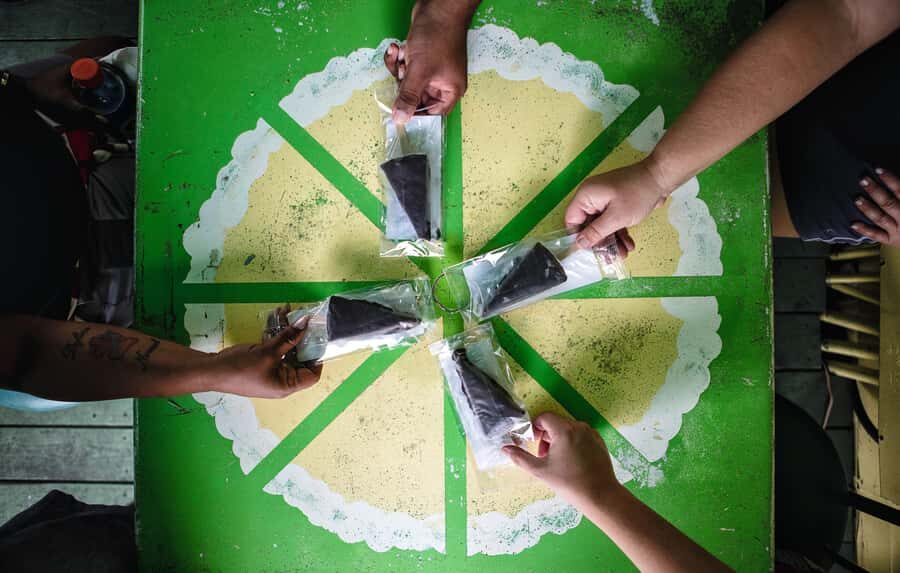
For dessert, the tour ends with a local favorite: Key lime pie dipped in chocolate. Key lime is the star of Key West, and chocolate adds that extra hit of richness that turns dessert into a proper finale.
In some experiences, the chocolate-dipped version has been specifically connected to Kermit’s famous take on Key lime pie—so if that’s your thing, you’re likely in for a memorable ending. Either way, the structure works: creamy-tart lime first, then the chocolate coating brings a deep sweetness that sticks with you.
What makes this feel local, not like a checklist tour
A lot of food tours stop at “eat here, eat there.” This one tries to do something else: connect the food to Key West life. You’ll get the city’s stories passed down through time, plus explanations of why certain flavors and cultures show up where they do.
You also walk farther from purely touristy venues while still staying within Old Town. That balance is what makes it feel authentic. You’re not just consuming food—you’re learning how people live and eat here.
Your guide’s role: Kitty, Megan, Brad, and John set the tone
The tour’s success hinges on the guide. The operator clearly aims for passion and experience, and you’ll see it in how guides handle the group.
Guides like Kitty have been praised for giving an easygoing tour without getting in the way, letting you take in the city while still keeping the rhythm. Megan has been noted for fascinating local history that ties cleanly into the food choices. Brad has led groups where the secret dish landed especially well. John is another name that’s come up for Key West history knowledge.
One consideration: not every guide will lean equally into history. If local history is your priority, bring it up early and ask a couple of questions. You’ll get more out of the tour that way.
Food included: how to pace your appetite
Your included bites cover a full arc, not just random samples:
- Iced coffee and fresh baked cake
- Cuban cuisine
- Our Secret Dish
- Conch fritters
- Chocolate covered Key lime pie
- Water
Because the tour includes multiple tastings, you’ll likely finish full—sometimes in a way that affects dinner plans for the rest of the day. The smart move is to treat your other meals that day as lighter.
Dietary needs are handled with care, but you need to ask ahead of time. Contact [email protected] before booking to see if your dietary requirements can be accommodated.
Price and value: is $115 fair for 3 hours and all that food?
At $115 per person for a 3-hour small-group walk, you’re paying for more than food. You’re paying for:
- a local guide
- access to several specific local food stops
- multiple included tastings
- rum tasting plus water
That can be good value if you’re a first-timer in Key West or you want a guided path through Old Town without spending time hunting. It’s also a strong buy if you enjoy learning while you eat, because the tour is designed to add context rather than just calories.
It might feel pricey if you’re the kind of person who prefers to pick from menus on your own, or if you only want one solid meal. Also note what isn’t included: transportation (and no hotel pickup/dropoff by default). You’ll need to get yourself to the meeting point at Doing Work Coffee.
Practical tips before you go (so the tour feels easy)
- Wear comfortable shoes. This is a walking tour, and Key West adds heat.
- Bring an extra bottle of water if you run warm. Water is included, but humidity is real.
- Arrive 5 minutes early and look for the orange umbrella.
- If you have dietary needs, email [email protected] first.
- Plan to stay flexible with timing. It’s only 3 hours, so you want to be present and ready.
Who this tour is best for
This Key West secret walking food tour is a great fit if you:
- like walking + eating instead of sitting through a single long meal
- want to understand the city’s food culture through a local guide
- enjoy Caribbean flavors, especially Cuban cuisine and Key lime
- appreciate a small group where your questions don’t disappear into a crowd
It’s less ideal if you strongly dislike walking, want a fully private tour, or prefer to choose every meal on your own.
Should you book the Key West Secret Walking Food Tour?
Book it if you want a smart introduction to Old Town Key West that’s built around real food stops, local stories, and a guided pace. At $115, the value makes sense because you’re not just buying snacks—you’re getting a planned route, multiple tastings, and a rum tasting, all in a max 10-person group.
Skip it if you’re mostly after one meal and don’t care about food history or cultural context. If you care about both, this tour is one of the more satisfying ways to experience Key West without wandering randomly.
FAQ
Where is the meeting point for the tour?
The tour meets at Doing Work Coffee, 335 Duval St, Key West, FL 33040, USA.
How long is the Key West secret walking food tour?
The tour lasts about 3 hours.
How many people are in each group?
It’s a small group limited to 10 participants.
What time does the tour run?
The tour is usually available in the morning and afternoon.
What food is included?
Included food items are iced coffee and local fresh baked cake, Cuban cuisine, conch fritters, our delicious secret dish, and chocolate covered Key lime pie.
What drinks are included?
Water is included. A rum tasting is part of the experience, and alcohol upgrades may be available.
Is transportation or hotel pickup included?
No. Transportation and hotel pickup and dropoff are not included, though hotel pickup/dropoff can be arranged on request.
What should I do if I have dietary requirements?
Contact [email protected] prior to booking to ask whether your dietary requirements can be accommodated.
How do I find the guide?
The guide will have an orange umbrella. Arrive at least 5 minutes early.
Is gratuity included?
No. Gratuities are not included and are highly appreciated.
]]>The small-group size (limited to 7) keeps things relaxed, and guides such as Mike and Danielle tend to mix history with conversation so questions don’t get brushed off. Expect all-weather touring—ponchos are provided—plus smart details like skip-the-line entry at the start through a separate entrance. If you’re picky about seafood or conch, flag it early, because conch shows up in more than one form.
Key Things That Make This Tour Worth It
- Five tastings that collectively add up to a hearty meal, not five sad bites
- Cuban and Caribbean influence explained through food, not just facts on a timeline
- Historic Old Town walking with stops chosen for local, family-owned flavor
- Small group (7 max) for better pacing and more guide time per person
- E-guide + recipe collection so you can recreate the vibe after you get home
- Ponchos in bad weather so your plans don’t collapse with the clouds
Cuban and Caribbean Flavor in Key West: What You’re Actually Eating
Key West’s food culture doesn’t come from one place. It’s shaped by island trade routes, Cuban neighbors, and the everyday habits of families who ran kitchens for generations. On this tour, that mix comes through in what you taste and why it exists.
You’re not just sampling “popular dishes.” The stops are picked to connect Cuban and Caribbean influence to Key West staples—especially seafood-forward comfort food and citrusy desserts. And because the tour is built around multiple venues, you get a sense of how different neighborhoods and restaurant types contribute to the same overall Key West identity.
One thing I love is that the guide keeps the story tied to the plate. You hear how certain ingredients fit local industry and culture, then you taste the result moments later. It turns the walking route into a kind of open-air classroom—without killing the fun.
Meeting at El Siboney and the 7-Person Old Town Rhythm
You meet your guide at El Siboney Restaurant, 900 Catherine St. Getting there early helps because you’ll want to start fresh—sun and humidity in Key West can sneak up on you fast.
This tour runs as a small group limited to 7 participants, which matters more than you’d think. With fewer people, the guide can adjust pacing, answer questions as they pop up, and keep the timing from turning into a stressful herd herding exercise. In past tours, guides like Marissa and Mike have kept the vibe casual and easy, which helps you actually enjoy the “between stops” moments too.
There’s also skip-the-line help through a separate entrance. That sounds minor, but it reduces wasted time when a place gets busy, and it keeps the day from feeling like you’re waiting around for food you haven’t even reached yet.
Stop-by-Stop: The Five Tastings That Add Up to Lunch
This tour is built around five different locations with tastings planned to cover Key West’s “must-try” flavors. You’ll move from spot to spot in historic Old Town, usually hitting a mix of classic seafood fare, Latin-Caribbean influences, and the kind of dessert people argue about.
Because exact menus can vary by day, I’ll focus on what the tour is clearly designed to include, plus how each stop tends to feel in the flow of the walk.
Stop 1: Conch in Classic Key West Form
One of the headline tastings is conch—often served as conch fritters. This is a great first course because conch fritters give you texture right away: crisp outside, flavorful inside, and very Key West in spirit.
One practical note: conch is seafood. If shellfish isn’t for you, tell your guide at the beginning so they can guide you on what’s possible within the tour structure.
Stop 2: Island-Style Fish Tacos
Another stop centers on fish tacos, another Key West signature that reflects Caribbean seasoning habits and coastal practicality. This is the tasting that usually feels lighter than the fritter bite, so it resets your palate before the tour shifts into more comfort-food territory.
If you like sauces and citrus notes, this is often the moment you’ll start paying attention to how different restaurants balance salt, spice, and acidity.
Stop 3: A Cuban-Caribbean-leaning “Local-Only” Plate
Mid-tour, the guiding idea is that you’ll hit family-owned ethnic restaurants and “hole in the walls” that visitors might not find on their own. The theme is Cuban and Caribbean influence, so expect the menu choices to reflect that heritage through flavors and cooking styles—not just branding.
This is the stop that often makes people say, I wouldn’t have picked this place alone. And that’s the point: Key West is full of restaurants, but local habits are the shortcut to the best ones.
Stop 4: Key Lime Pie for the Classic Finish
Dessert on this tour isn’t an afterthought. Key lime pie shows up as one of the tastings, which is exactly what you want in the second half of the walk. Lime cuts through the earlier savory flavors, and the tart-sweet balance is pure Key West.
It’s also a smart pacing choice. Dessert later in the route means you’re not full too early, and you’ll still have room to enjoy the final stop without feeling stuffed.
Stop 5: Another Done-Right Local Favorite
The final tasting rounds out the picture—another classic stop chosen from locally loved eateries, often offering a last flavor that ties the theme together. Sometimes that final stop leans savory; other times it leans sweet or snacky, depending on what the day’s venues are serving.
One review-style hint I’ll share as advice: don’t treat this like a “just a little sampler.” Even when individual portions aren’t huge, the five stops collectively turn into a full meal. I’d skip breakfast beforehand if you want the tastings to feel properly satisfying.
The Walking Part: Why the Neighborhood Story Matters
This tour doesn’t separate food from place. Between tastings, you’re walking through historic Old Town and learning how neighborhoods and landmarks shaped daily life.
Your guide talks about local industry and Key West’s past, including the kinds of colorful details that don’t show up on a generic brochure. What makes it click is the timing: you get a bit of story, you see (or walk past) a landmark, then you eat again. It keeps your brain engaged while your feet do the work.
Guides like Chris and Larry have been noted for pacing and Q&A, which is useful if you want specific answers—like which areas feel most “locals eat here,” or what to do next after the tour ends.
How You Leave the Tour Better: Recipes, Recommendations, and Coupons
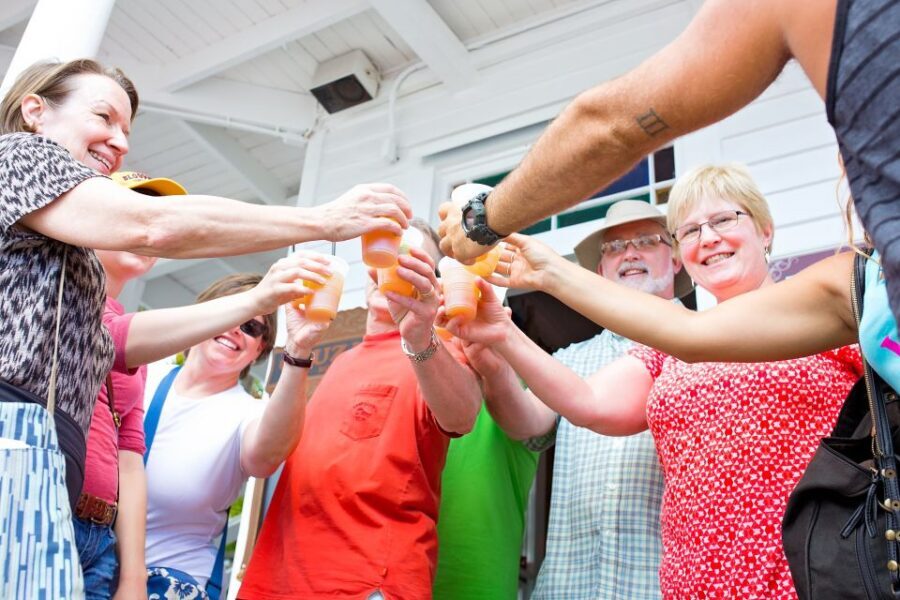
The tour package doesn’t vanish at the last bite. You receive an e-guide booklet of Key West with neighborhood dining recommendations, plus an exclusive e-recipe collection so you can recreate the flavors later.
That matters if you’re here for more than one day. Key West can feel repetitive if you only rely on what you’ve heard before. The neighborhood recommendations help you plan your remaining meals around where you’ve already learned to look.
You also get shopping coupons and discounts at partnering restaurants. I wouldn’t treat that as the main reason to book, but it’s a nice practical bonus—especially when you’re already in “I want one more meal” mode after your tastings.
Weather, Sun, and the Walking Reality

Key West weather can change fast, and this tour runs in all conditions. Ponchos are provided if needed, which is a relief when you’d rather not abandon your plans mid-storm.
What you should bring is simple and non-negotiable:
- Comfortable shoes for uneven sidewalks and lots of stop-and-go walking
- Sun hat, sunscreen, and camera
- Comfortable clothes for heat and humidity
Also, plan for a decent amount of walking between places. One caution I strongly agree with from real-world experience: if you’re using bikes or plan to rely on a parked vehicle, make sure you’re not accidentally creating a long “walk back” situation at the end. The tour itself is only 3 hours, but Old Town distances add up.
Who Should Book This Key West Cuban and Caribbean Food Tour
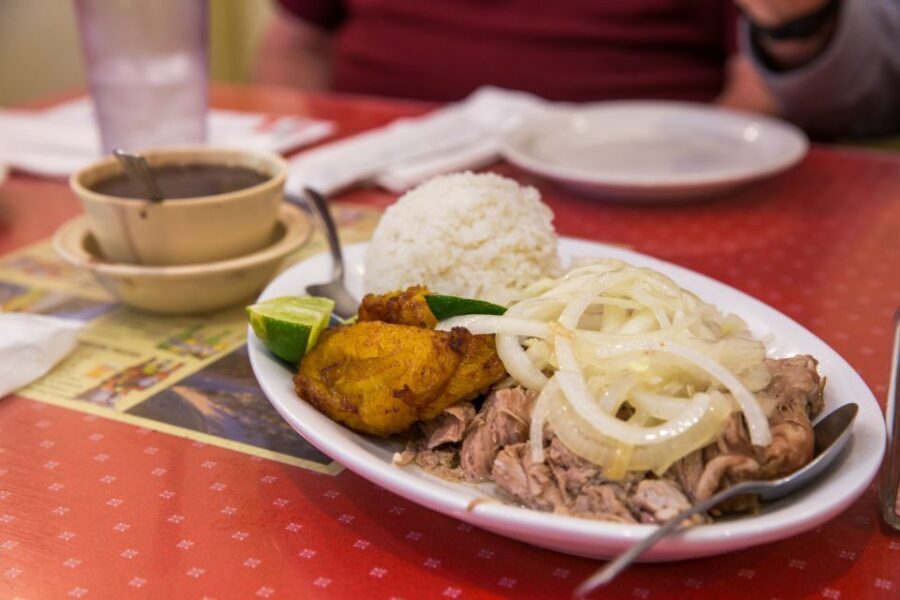
Book it if:
- You want a focused food tour with actual stops and a meal-like result
- You like Cuban and Caribbean influence and want it explained through what you eat
- You prefer small groups and a guide who talks with you instead of over you
- You’re new to Key West and want neighborhood confidence fast
Skip it or ask questions first if:
- You dislike conch or have seafood restrictions (conch appears as a notable tasting)
- You can’t do a multi-stop walking route comfortably
- You’re hoping for a mostly “sit and snack” experience
Should You Book This Tour?
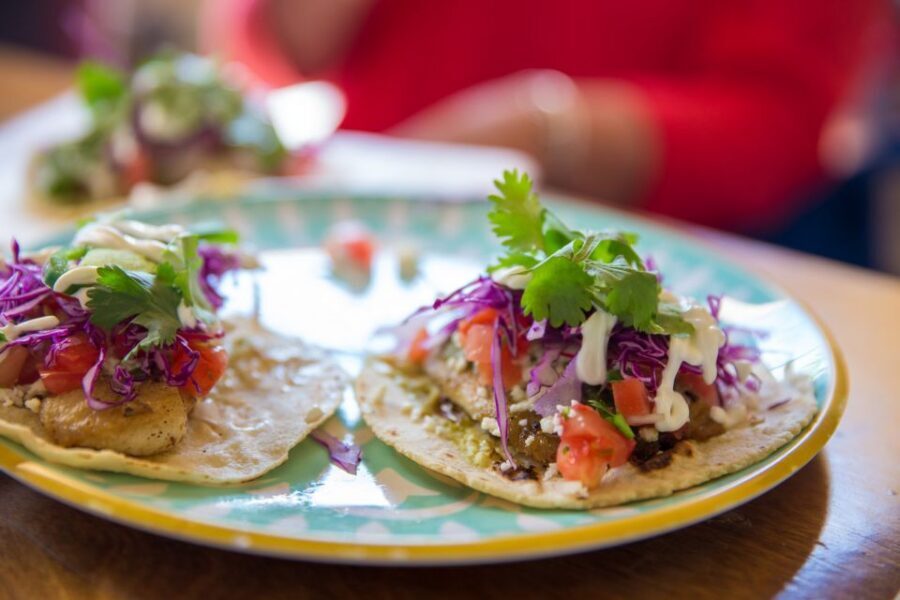
Yes, if your idea of a great Key West day includes walking Old Town, eating your way through Cuban and Caribbean flavors, and getting a guide to explain what you’re seeing and tasting. This tour’s value is in the combination: five tastings, local stories, and practical take-home tools like recipes and dining recommendations.
If you’re the type who plans meals with care and wants fewer tourist traps, you’ll likely feel like you hit the local fast lane. Just come ready for the sun, bring the right shoes, and keep your breakfast light—this is built to feed you.
FAQ
How long is the Key West Cuban and Caribbean Food and Cultural Walking Tour?
The tour lasts 3 hours.
How many food tastings are included?
You get five food tastings.
Where is the meeting point?
Please meet your guide at El Siboney Restaurant, 900 Catherine St.
Is the tour a small group?
Yes. It is limited to 7 participants.
Is the tour wheelchair accessible?
Yes, the tour is wheelchair accessible.
What should I bring?
Bring your passport or ID card, comfortable shoes, sun hat, camera, sunscreen, and comfortable clothes.
Are pets allowed?
Pets are not allowed, but assistance dogs are allowed.
]]>You’ll set out from Key West’s historic sea port and sail straight out for unobstructed views. Expect finger-food-style appetizers (everything from Swedish meatballs to cheese-and-crackers) while music plays overhead and people head up to the upper deck to dance. The cruise is also interactive in small ways, like the crew letting you help raise the sails and arranging a chance for a picture taken while you are at the helm.
Key West Sunset Cruise Highlights You’ll Feel Right Away
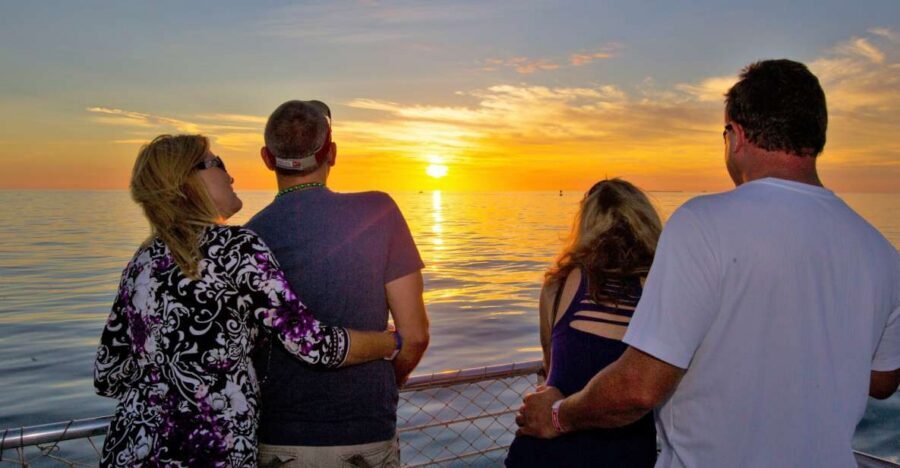
- Sandie Cat catamaran with 3 decks and capacity up to 149, so there’s room to breathe
- Unlimited open bar with options like rum runners, Champagne, margaritas, and draft beer
- Appetizers included such as Swedish meatballs, pita and hummus, and meat/veg platters
- Live music on board with onboard performers (including DJ-style sets and musicians)
- Upper-deck dancing while you watch the horizon, not a distant shoreline
- Hands-on sailing moments like helping raise the sails and getting a helm photo
Why a Catamaran Sunset Cruise Beats Watching From Shore
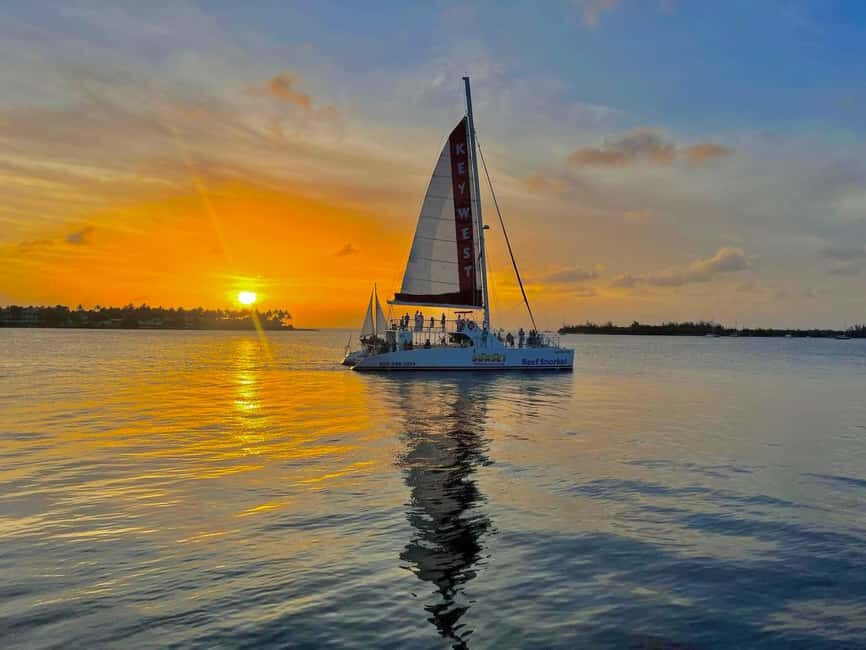
Key West sunsets are famous for a reason, but shore-based viewing can feel like a crowded waiting game. From the water, you get a cleaner horizon line and a wider view arc. On this cruise, the whole plan is timed around that push out toward open water, so you’re positioned for the “sun on the edge of the world” look.
I also like that it does not pretend to be a hardcore sail. Several people describe it as a chilled ride south of Key West, which is exactly what you want for a sunset evening. You’re there for atmosphere: sea breeze, music, drinks, and that slow shift in color as evening takes over.
Getting Onboard the Sandie Cat: Space, Decks, and the Social Setup

You’ll sail on the Sandie Cat, one of Key West’s newer sailing catamarans. With up to 149 passengers split across 3 decks, the boat is designed so you’re not trapped in one small pocket of space. That matters, because sunset cruises often come with a simple problem: everyone wants to be in the same place at the same time.
On this one, you can spread out. Grab a drink, find a spot on deck, and then move up to the upper level when the music gets going. The vibe is social but not chaotic, and the ship’s layout makes it easy to switch between “watch the sunset” mode and “dance to the music” mode.
If you enjoy the hands-on side of travel, you’ll probably appreciate the crew’s willingness to include passengers. People report that captains and crew let you help raise the sails, and you can also ask for a picture while driving the boat. Captains and staff names like Matthew and Belinda show up in feedback, which is a nice reminder that the crew experience is a real part of the evening, not just background service.
Open Bar Drinks: What’s Included and How to Pace the Evening
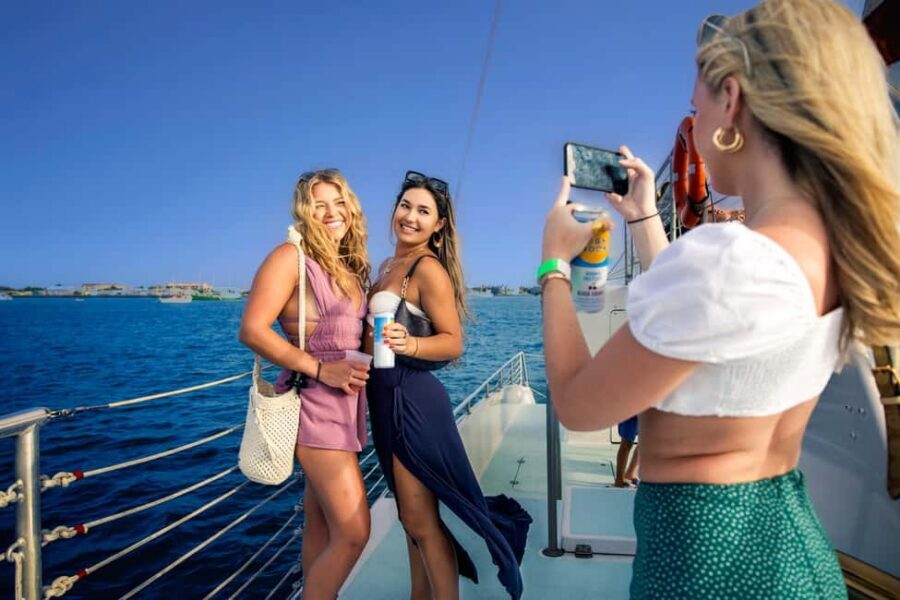
The open bar is a major part of the value here because it changes the whole math of a night out in Key West. For $79, you’re not paying drink-by-drink prices while the sunset is happening. The cruise lists unlimited drinks, and reviews highlight that the bartenders keep things moving.
The menu includes:
- Rum runners
- Champagne
- Margaritas
- Draft beer
A practical tip: pace yourself. Two hours goes fast, especially when you’re rotating between decks for photos and views. If you’re doing the full dance-and-view routine, you’ll drink more than you think. I’d plan on a light first drink, then settle into what you actually want for the middle and final stretch.
Also, a few reviews mention an option to upgrade for premium libations. That’s not something you should count on, but it tells you the bar tends to go beyond basic mixing if you ask at the rail.
Appetizers Included: Swedish Meatballs, Pita and Hummus, and Snack Strategy
Food on sunset cruises can be hit-or-miss. Here, you get a selection of finger foods designed for nibbling while you watch the horizon. The cruise description calls out multiple types, and the overall theme is easy eating: things you can hold, share, and keep your eyes on the water.
What’s included can include:
- Swedish meatballs
- Veggie treats
- Cheese and crackers
- Pita and hummus
- Meat and veggie platters
One thing I like about the way people describe the food: it’s not a sit-down meal. It’s a steady “snack buffet” approach that fits the tempo of a party-on-deck sunset. Some feedback specifically notes appetizers being replenished, which is helpful if you arrive hungry and don’t want to grab a single plate and then hope it lasts.
One small reality check: you’re on the water, so seagulls can come close. A review mentions getting close to the boat and food, so keep snacks covered and hold onto your plate. If a bird is hovering, that is your sign to pause and relocate your food before it becomes an unplanned garnish.
Live Music and Dancing: The Upper Deck Is the Real Stage
The entertainment is not an afterthought. The cruise includes live music, and the energy is meant to be physical. People head upstairs, order a drink, and dance while the horizon does its thing.
You’ll likely hear DJ-style sets and onboard performers, and multiple reviews call out the music as a standout. One review specifically mentions a steel drummer/singer, and others mention an onboard musician who felt interactive. Translation: it’s not just background noise. The music is part of the evening’s rhythm, which is why it pairs so well with the sailing time.
If you like a lively atmosphere, this is your move. If you prefer quiet sightseeing, you can still find calmer corners on lower decks, but this is clearly designed as a fun night out, not a silent nature cruise.
The Sailing Portion: Timing, Views, and the Wildlife Moments
The cruise goes out from Key West’s historic sea port and heads straight toward open water. The goal is unobstructed views of the sunset on the horizon. That sounds simple, but it’s the difference between seeing a “cloudy line of light” from shore versus actually watching the sun drop into the sea-level horizon.
You may also catch wildlife. One review mentions dolphins spotted right before sunset. Another review notes seagulls close to the boat. You can’t schedule dolphins, but you can bet that the ocean will keep doing ocean things—so keep your phone ready and your eyes up.
How “sailing-like” is it? Reviews describe it as more chilled than technical sailing. If you’re hoping for big sail angles and a sport-sailing experience, adjust your expectations. If you want a smooth, scenic cruise with the fun parts turned on, you’ll probably be happy.
Weather Reality Check: Cloudy Skies Still Make the Night Worth It
Sunset cruises live and die by weather, and Key West can surprise you. Some feedback mentions cloudy conditions at sunset. Still, people describe gorgeous skies and a great overall experience because the cruise experience is more than the exact moment the sun disappears.
If the sky is overcast, you may get softer colors instead of sharp contrast. The music and open bar don’t change, though, and the boat’s motion plus the view of open water still feel like a vacation you can’t replicate from land.
This is one reason I like booking a cruise like this with a 2-hour window: even when the sunset is less dramatic than the postcards, you still come away with a solid evening on the water.
Price and Value in Key West: Why $79 Works (When You Use It)
At $79 per person for a 2-hour cruise, you’re paying for a package: boat time, open bar, included food, and live music. In Key West, “a couple drinks and an activity” can quickly exceed that. The open bar changes the value equation because you can plan your night around it rather than treating drinks as an extra cost.
Is the food a full meal? No. It’s finger-food style. But for the price, it functions as practical fuel for the evening. You’re not stuck hungry while waiting for the main event.
The best value shows up when:
- you drink at least a few cocktails or beers
- you want live music and a built-in social atmosphere
- you care about horizon views more than a long multi-stop excursion
If you are dead set on a quiet, food-forward dinner experience, you may find the included appetizers more basic than you hoped. But if you want sunset + drinks + music in one clean block of time, the pricing makes sense.
Who This Cruise Suits Best (and Who Might Skip It)
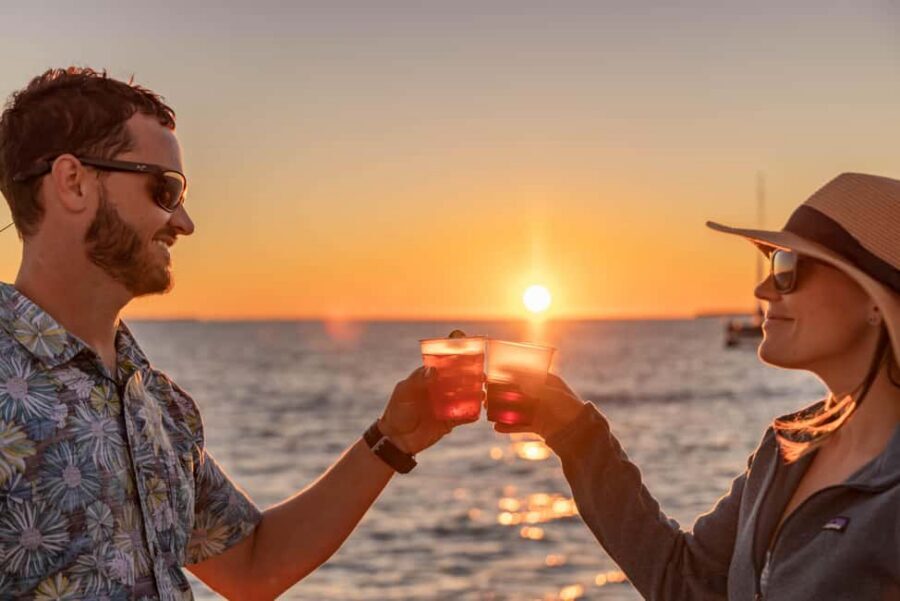
This is ideal if you:
- want a classic Key West sunset setting from the water
- like a party-leaning atmosphere with live music and dancing
- want an evening where the bar is handled for you
- prefer easy, snack-style food while you take photos
You might skip it if you:
- strongly prefer quiet sightseeing with minimal noise and dancing
- expect a meal that replaces dinner
- are the type who gets annoyed by seagulls near food (you can manage this, but it is part of the marine setting)
And if you want interaction, you’re in luck. The chance to help raise the sails and get a helm photo is the kind of small memory that makes the whole evening feel more personal.
Should You Book This Key West Sunset Cruise?
I’d book it if your ideal Key West night looks like open bar, live music, and a sunset you can actually watch drop toward the horizon. The Sandie Cat setup with multiple decks helps you enjoy the view without feeling trapped, and the included food is enough to keep you comfortable through the main event.
I’d think twice only if you need a guaranteed showy sunset under all skies, or if your priority is a sit-down meal and quiet conversation. This cruise is built for fun and views together, not for strict culinary seriousness.
If your timing matches and you’re okay with the weather being a wildcard, this is one of the easiest ways to turn a sunset into a full evening.
FAQ
How long is the Key West Signature Sunset Cruise?
The cruise lasts 2 hours.
How much does it cost?
The price is $79 per person.
Where does the cruise depart from?
You set sail from the historic sea port of Key West.
Is there an open bar on this sunset cruise?
Yes. The cruise includes an unlimited open bar.
What drinks are included in the open bar?
The open bar includes options such as rum runners, Champagne, margaritas, and draft beer.
What food is included?
Food is included as finger foods/appetizers, such as Swedish meatballs, veggie treats, cheese and crackers, pita and hummus, and meat and veggie platters.
Is live music included?
Yes. Live music is included during the cruise.
What should I bring with me?
You should bring a driver’s license.
Is transportation to and from the meeting point included?
No. Transportation to/from the meeting point is not included.
]]>To make it smooth, I’d plan to arrive early at Bahia Mar since boarding is timed and you want a good view. Bring layers because the boat can feel chilly later, even in warm months. And if you have strict dietary needs, know the dinner is centered on BBQ ribs and chicken, and the options may be limited.
Key things I’d circle on your plan
- Historic New River narration with million-dollar homes, yachts, and clear, upbeat commentary
- All-you-can-eat BBQ focused on ribs and chicken with the usual sides
- Big energy show lineup mixing comedians, jugglers, ventriloquists, singers, magicians, plus a Polynesian revue
- A true two-act evening: cruise first, dinner and entertainment after, then a relaxed return trip
- Onboard comfort with restrooms on the Jungle Queen boats
Bahia Mar check-in and the 6:00 pm start that shapes your whole night
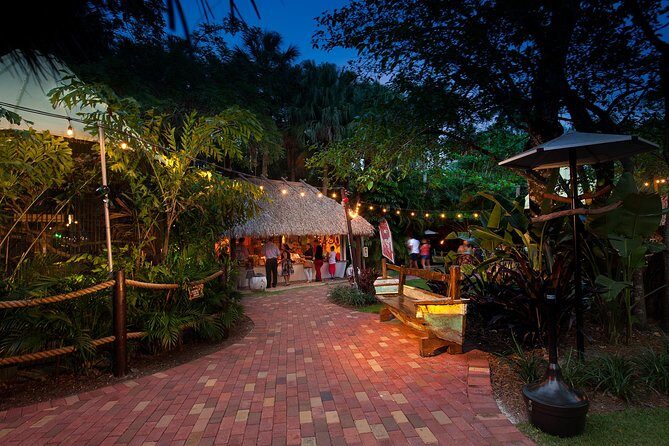
This is a 4-hour-style evening that starts at 6:00 pm. Your meeting point is 801 Seabreeze Blvd, Fort Lauderdale, at Bahia Mar Yachting Center, and the tour ends back at the same place. The day of, give yourself time to park, find check-in, and settle in before departure.
Plan to arrive 45 minutes early. That timing matters because you want to get seated before the boat leaves, and you also avoid that last-minute scramble that can make a fun trip feel stressful. Also, there’s a restroom on board, so you’re not stuck waiting until later.
Parking can be pricey at the Bahia Mar area. One review mentioned parking fees ranging roughly from $25 to $55, depending on where you park, so it helps to budget for it even if it’s not part of your ticket price.
The New River cruise: where Millionaire’s Row turns into a story
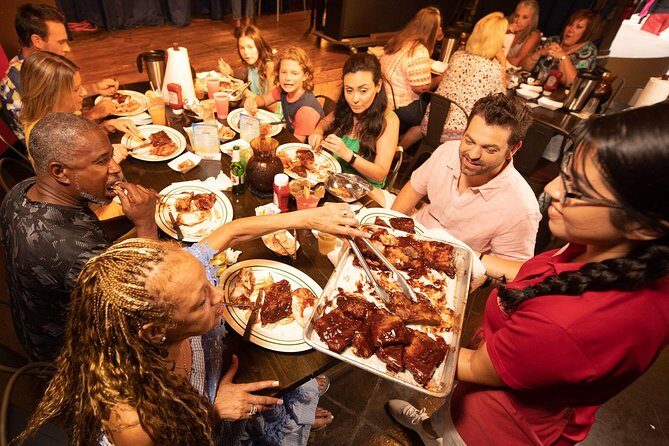
The first hour is all about the cruise down Fort Lauderdale’s New River, often called the Venice of America. You’ll move through quiet waterways, past mansions and mega-yachts, and you’ll get narration that helps you connect what you see to what it means.
This is the part I think many people underestimate. You’re not just looking at waterfront houses while chatting. You’re getting guided context while the boat glides along, so the scenery sticks in your mind instead of blurring into general skyline views.
On some nights, the narration and hosting can make a big difference. Reviews mention narrators like Monica and an MC named Nate, and that matters because a good host keeps the crowd smiling and listening through the full route. Even if you don’t catch every detail, the overall approach is entertaining, and the views are the reward.
What you’ll likely notice from the water
As you cruise, you’ll pass by or hear about landmarks and neighborhoods around downtown and Las Olas. The info provided with the experience points to stops/sights like Stranahan House (Fort Lauderdale pioneer Frank and Ivy Stranahan; built in 1901 as a trading post, later a residence), Colee Hammock Park near Las Olas, and the NSU Art Museum area in the arts district. You also get views toward places like Port Everglades and the Intracoastal Waterway as part of the broader route.
If you’re hoping for photo ops, late-evening light can be hit-or-miss depending on the season. Still, the lit homes and yacht glow can be a standout, and the boat’s pace makes it easier to frame shots than walking around crowded spots.
Tropical Isle dinner: all-you-can-eat BBQ that fuels the show
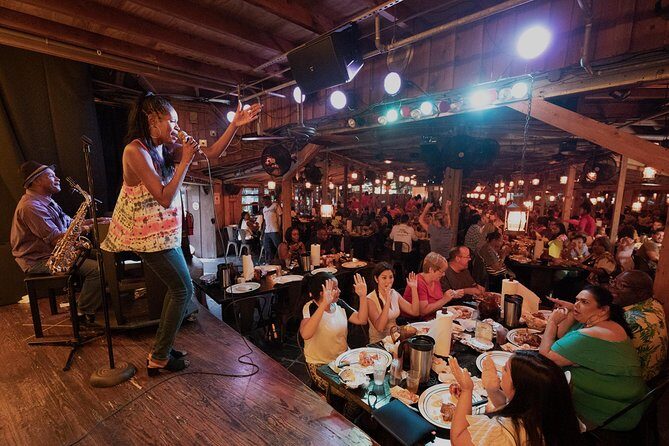
After the cruise, you arrive at the Tropical Isle village for dinner. This is where the evening turns from scenic to social. The dinner is all-you-can-eat, with BBQ baby back ribs and BBQ chicken, plus the fixings.
What I like here is that the meal is designed for a crowd and a show schedule. You’re not waiting on a complicated multi-course service. You get a steady dinner flow, and servers keep things moving so you can focus on eating and then settling in for the performance.
That said, a balanced expectation helps. The experience is built around ribs and chicken, so if you’re looking for a huge variety spread, you might feel that it’s more focused than flashy. Some reviews discuss sides like macaroni and cheese, coleslaw, baked beans, cornbread, and rolls, but the exact mix can feel inconsistent night to night.
Drinks and dessert: the spots where costs can change
Alcoholic beverages and soft drinks are not included. They’re available for purchase onboard and on the island, so if you want beer, wine, or cocktails, plan for extra spend. One review mentioned cocktails around $16, which gives you a sense of the pricing vibe.
Dessert is also not guaranteed in the ticket price. At least some reviews describe dessert as extra for purchase. If desserts are your priority, budget for it or be ready to skip it and keep your money for the show and photos.
Food quality: why reviews run warm and cool
Most feedback I see leans positive about flavor and satisfaction. People often describe the BBQ as tasty and ribs as a highlight, and several mention the staff being friendly and efficient.
But there are also some clear complaints, especially about food temperature and a more limited menu than expected. A few comments note chicken not matching expectations or meals arriving a bit rushed. The honest takeaway: this is a mass-catering dinner, so it can be excellent on one night and merely okay on another.
The show at Tropical Isle: comedy, juggling, and a Polynesian revue

Once dinner winds down, the entertainment ramps up. The show is described as America’s old running variety show style, and the lineup is built to keep different age groups engaged. Expect a mix that can include comedians, jugglers, ventriloquists, singers, magicians, and more, followed by a well-known Polynesian revue.
This is the part I’d call the main reason to book. Even if you’re unsure about the BBQ, the variety format helps. If one segment isn’t your style, another is usually right around the corner, and the show is designed to land with laughs and big stage energy.
Reviews also highlight that the show can include a hula-learning moment and lively dancing. If you’re traveling with kids or a mixed group of ages, this is a safer bet than an all-dinner crowd that requires longer attention. If you’re sensitive to loud sound, bring ear protection, because the stage performance can get loud.
One caution from the feedback: show length or content can vary. A couple comments say the show felt shorter than expected on certain nights, or that it leaned heavily toward specific performance types. That doesn’t seem to be the majority take, but it’s a reasonable consideration when you’re paying for a set evening package.
Timing and pace: how the evening really flows
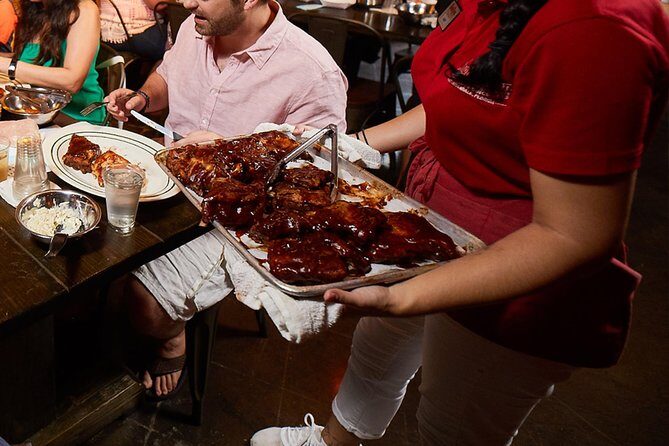
Your experience is structured like a loop: cruise out, dinner on the island, show, then a leisurely cruise back. The schedule keeps you from feeling stuck in one long waiting block.
One detail to notice is that the evening can move quickly after dinner. Some feedback says there wasn’t much time to explore the island before the show started, and that dinner service can feel fast depending on where you sit. If island wandering is on your list, I’d treat it as limited, not guaranteed.
Also, seat choice matters. Reviews suggest best views from certain positions, including the second floor and starboard side. That’s not something you can control for sure, but it’s worth looking up at the layout when you board and choosing wherever you have the best line of sight.
Comfort tips: what to wear on a riverboat at night
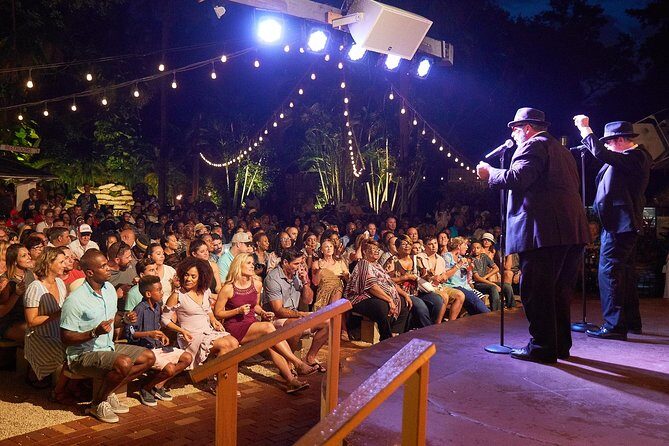
It’s Florida, but it’s still a boat at night. Wind can make the air feel cooler, especially once you slow down on open water. Reviews commonly recommend bringing a jacket or warmer layer.
Here’s how to pack smart:
- Bring a light jacket or hoodie.
- Wear shoes you’re comfortable standing in on a deck.
- Consider a small bag you can keep with you during show time.
The good news is that the boats are designed for sightseeing and include restrooms. Service animals are allowed, and guests under 16 must be accompanied by an adult, which is good to know for family planning.
Value check: how $80 fits this kind of night out
At $80 per person, you’re paying for a bundle: narration boat cruise, a set-time dinner, and a stage show. If you add those up separately in Fort Lauderdale, the package can feel like a deal because the pricing is mostly all-in.
Where the value can shift is in the extras:
- Drinks are extra.
- Dessert may be extra.
- Parking may be extra.
So the best way to judge value is to decide how you personally handle the add-ons. If you’re the kind of person who wants soda or beer, you’ll pay more than the base ticket, but you’ll also get a complete full-evening experience. If you’re on a tighter budget, you can keep it simple: drink water, eat the all-you-can-eat dinner, and focus on the show.
Another value factor: group size. The maximum number of passengers is 385, so it’s not a tiny private boat experience. Still, many reviews describe the operation as organized and timely, and the staff typically runs the meal line to keep people from getting stuck.
Who this Jungle Queen BBQ dinner cruise is best for
This works best for people who want a fun, guided night without complicated planning. If you like scenic water views, narrated sightseeing, and a comedy-forward show, you’ll probably have a great time.
It’s also a solid pick for:
- Couples looking for a relaxed evening activity
- Families with kids who can enjoy a stage performance
- Groups who want one ticket that does a lot
Where you should pause:
- If you’re a strict eater (vegetarian or other dietary needs), because the dinner is centered on ribs and chicken and some feedback suggests limited accommodation.
- If you’re very picky about food variety and side dishes, since this meal is more about filling BBQ than a giant buffet spread.
- If you expect desserts and drinks to be included, because they are not part of the ticket.
Weather and rescheduling: why the date matters
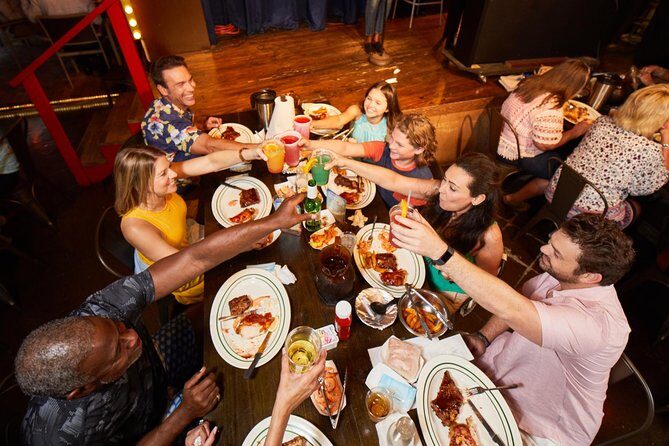
This experience requires good weather. If it’s canceled due to poor weather, you’ll be offered a different date or a full refund. So choose a night that fits your schedule, and don’t treat it like a guaranteed last-minute backup if the forecast looks stormy.
Also note: it’s easier when you’re early. Arriving on time isn’t just politeness; it helps you get the seat and timing that make the whole evening feel smooth.
Should you book this BBQ cruise with show?
Yes, I think it’s worth booking if your goal is a complete, low-effort evening in Fort Lauderdale. The combination of a narrated cruise past standout waterfront sights, an all-you-can-eat BBQ dinner, and a variety stage show is exactly the kind of packaged night out that saves you decision fatigue.
Book with confidence if you’re excited about BBQ and you want entertainment that keeps energy high. Skip or reconsider if you mainly care about gourmet food variety, if you need lots of dietary customization, or if you really don’t want additional costs for drinks and possible desserts.
If you want a fun night with real storytelling on the water and a laugh-filled show afterward, this is the kind of ticket that tends to deliver.
FAQ
Where is the meeting point and what time does the cruise depart?
The tour meets at 801 Seabreeze Blvd, Fort Lauderdale, FL 33316 and departs at 6:00 pm.
How long is the experience?
It runs about 4 hours (approx.).
What is included with the ticket?
You get a fully narrated New River cruise, an all-you-can-eat BBQ dinner with ribs and chicken, and a variety stage show. There is also a restroom on board.
Are drinks included?
No. Alcoholic beverages and soft drinks are not included and are available for purchase on board and on the island.
What food is served at dinner?
Dinner is described as all-you-can-eat BBQ baby back ribs and chicken, with all the fixings. Reviews mention sides like macaroni and cheese, coleslaw, baked beans, cornbread, and rolls, but the menu feel can vary by night.
Do I need to bring a jacket?
It can get cool on the water at night, and many people recommend bringing a warmer layer.
Is the tour affected by weather?
Yes. The experience requires good weather. If it’s canceled due to poor weather, you’ll be offered a different date or a full refund. You can also cancel for a full refund up to 24 hours in advance.
]]>