REVIEW · KEY LARGO
Kayak through Mangrove Forests in the Florida Keys
Book on Viator →Operated by Tavernier Creek Kayak Tours · Bookable on Viator
Mangroves here feel close enough to touch. This kayak tour in the Florida Keys takes you through quiet creeks and tunnel-like mangroves, then out to a saltwater lagoon where wildlife often makes an appearance. I like that it’s guided, so you’re not just guessing where to paddle, and I like that the route is built around still, secluded water.
Two things I really like: you use a tandem, sit-on-top kayak (more stable and easier to handle), and you go with small group sizes led by local guides who actually point out what’s living around you. People also mention guides bringing the tour further into the mangroves than they expected to go, which matters when you’re chasing the best scenery and the calmest water.
One consideration: this is weather-dependent. If conditions aren’t good, the tour can be canceled, and you’ll need to be flexible with dates. Also, there’s no lunch included, so plan your food around a morning or afternoon on the water.
In This Review
- Key Highlights That Make This Tour Worth Your Time
- Mangrove Tunnels in Key Largo: What You’re Really Signing Up For
- Getting Set Up at Tavernier Creek Kayak Tours (Old Conch Harbor)
- The Canal Exit: A Quick Ocean-Edge Moment Before the Creek
- Under the Overseas Highway: Where the Pace Becomes Mangrove-Focused
- The Main Mangrove Experience: Quiet Tunnels, Iguanas, and Birds
- The Best Pause: Mangrove Break and Saltwater Lagoon Time
- Wildlife Sightings: What You Can Expect (And What You Shouldn’t Assume)
- Price and Value: Why $65 Can Feel Like a Good Deal in the Keys
- Who Should Book This Kayak Tour—and Who Might Want Something Else
- Should You Book Kayak Through Mangrove Forests in the Florida Keys?
- FAQ
- How long is the kayak tour?
- Where does the tour start and end?
- What is included in the $65 ticket price?
- What wildlife might we see on this trip?
- Is the kayak shared or solo?
- What should I know about weather?
- Can I get a full refund if I cancel?
Key Highlights That Make This Tour Worth Your Time
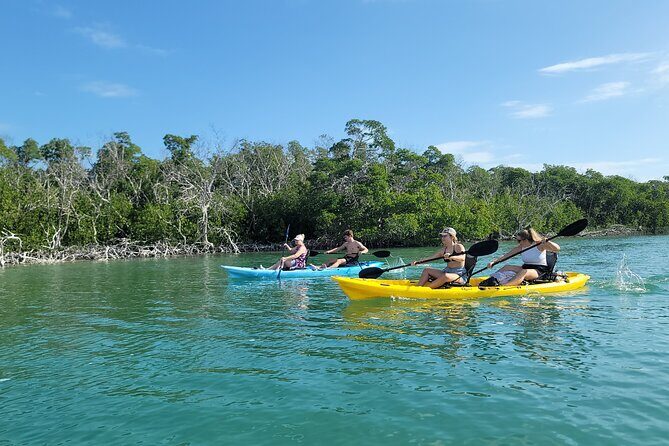
- Small-group kayak experience with a guide and room to hear what’s going on around you
- Tandem sit-on-top kayaks designed for easier boarding and stable paddling
- Paddle through mangrove tunnels that are often too narrow for motorized boats
- Saltwater lagoon stop where you can pause and scan for wildlife
- Jellyfish sightings in an open area can be a standout moment on the trip
- Guides help you spot details like sponges and the mangroves’ role in the ecosystem
Mangrove Tunnels in Key Largo: What You’re Really Signing Up For
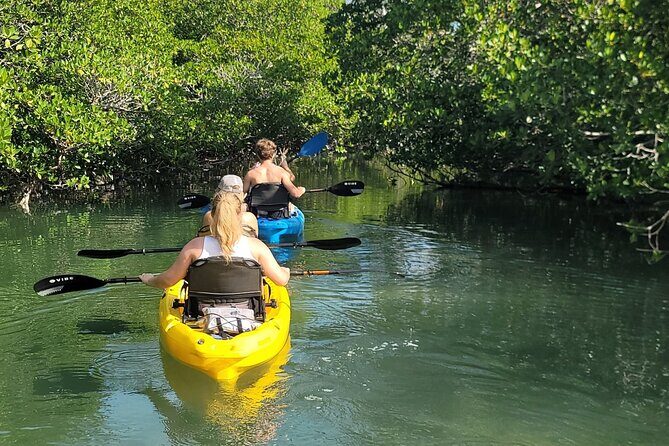
This isn’t a “row around and hope” kind of outing. The appeal is the way the Florida Keys creeks work: mangroves form tight corridors, and that structure changes the whole feel of the trip. Your paddle strokes become the main sound, and the water stays calm enough that you can actually look.
The route also gives you variety. You start by leaving a canal and heading toward the open ocean side briefly, then you turn north into Tavernier Creek. From there, you work your way under the Overseas Highway and deeper into the mangroves, where you trade open views for shade, tunnels, and wildlife spotting.
Most importantly, the tour is designed for close-up nature time. You’re not driving by habitats from a distance. You’re moving slowly through them, which makes the small stuff easier to see: fish, birds, and even things like sponges that many people never notice on a beach or dock.
You can also read our reviews of more tours and experiences in Key Largo
Getting Set Up at Tavernier Creek Kayak Tours (Old Conch Harbor)

Meet at Old Conch Harbor, 90311 Overseas Hwy in Tavernier. Expect a straightforward start: you arrive, get safety instructions, and then board your kayak. Reviews specifically call out the dock entry as solid for getting on and off, which is a real quality-of-life detail when you’re dealing with real water, real boards, and real momentum.
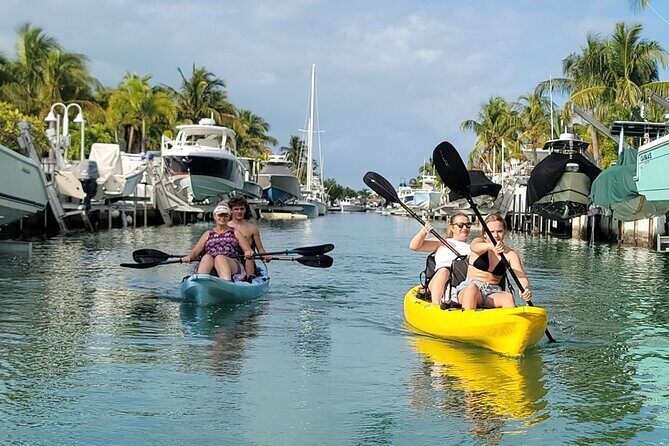
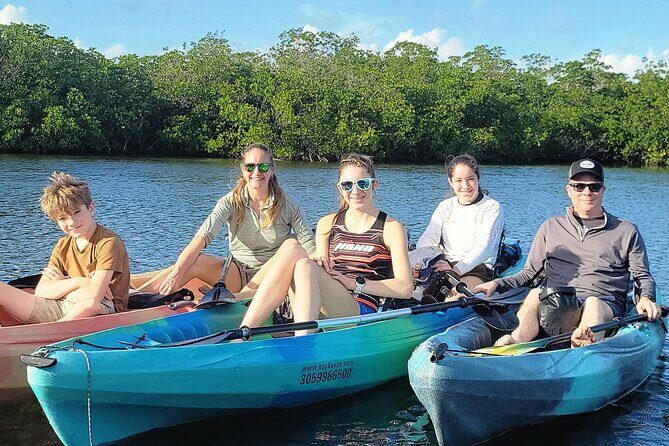
You’ll paddle a tandem, sit-on-top kayak. That combination is a big deal for first-timers and families. Sit-on-top kayaks are easier to manage if you need to adjust, look around, or handle a little splash. Tandem seating also spreads the load, and it makes the trip feel more social without turning it into chaos.
Groups max out at 18 travelers, and the tour keeps its size small. That means you’re not constantly waiting for bottlenecks or trying to see around someone else’s paddle. In mangrove areas, that matters because the turns and routes can get tight.
The Canal Exit: A Quick Ocean-Edge Moment Before the Creek
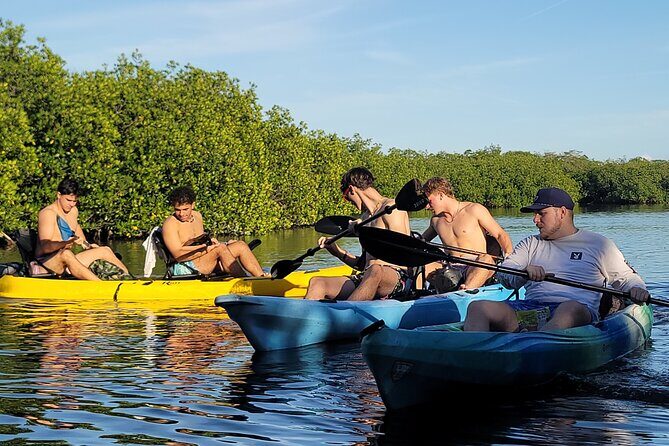
After the safety talk, you paddle out of the canal toward the open ocean. This early section is short, but it gives you a useful sense of orientation. As you leave the canal, you can spot Kalteux Key and the Atlantic Ocean to the right (south), then you turn left to head north into Tavernier Creek.
That detail is helpful if you like understanding where you are rather than just following a guide. It also sets expectations: the ocean is nearby, but the trip’s “real story” happens once you slip into the creek.
If you’re hoping for wildlife, this is also the part of the trip where your attention starts clicking on. You’re still transitioning—less “maze,” more “search”—and that keeps the first part engaging while you warm up your rhythm.
Under the Overseas Highway: Where the Pace Becomes Mangrove-Focused
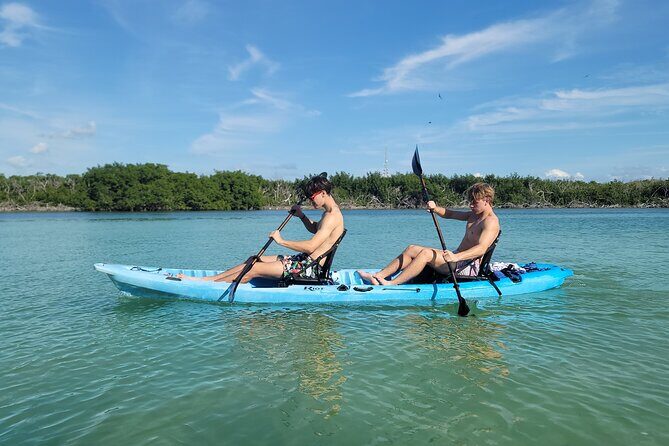
As you head north into Tavernier Creek, you navigate under the Overseas Highway. After that, it becomes more about the creek itself than open-water travel. Keep a sharp eye out, because the mangrove corridor changes what you see and how you see it.
This is where the guided aspect pays off. People talk about routes that feel like they go farther than other kayak trips, which can mean more time in the deeper-feeling waterways and less time stuck at the edge. In tight ecosystems, the “where” is everything. A good guide helps you follow the safest, most scenic lines—especially when mangroves crowd the shoreline.
You may also notice current and small paddling effort differences during parts of the journey. One review mentions an occasional current that you row against, but it sounds manageable for a wide range of ages. That lines up with the tour’s “most travelers can participate” stance.
The Main Mangrove Experience: Quiet Tunnels, Iguanas, and Birds
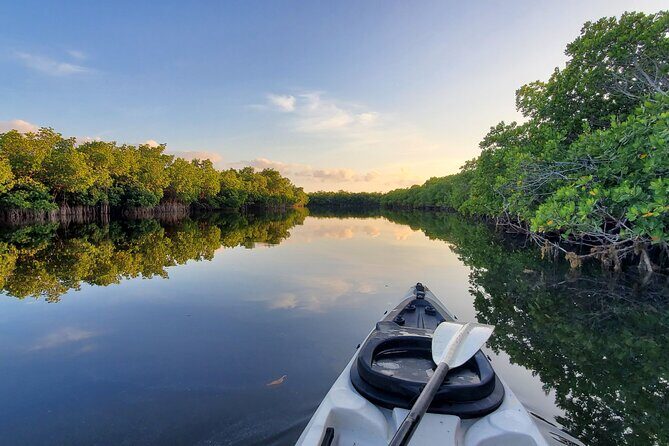
Soon you’re paddling through Tavernier Creek’s mangrove forests. These are the kinds of waterways that are often too narrow for motorized watercraft, which is exactly why a kayak experience works so well here. The water stays quieter, and the shoreline feels more alive because you’re not competing with engine noise.
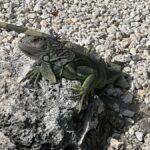
Guides help you slow down and look. One guide shared information while pointing out animals and plants; in particular, people mention spotting green iguanas and a mix of birds and fish. Another review brings up sponges as something you can find when you know what you’re looking at.
This is also where the mangroves’ practical role shows up in the conversation. Mangroves aren’t just scenery. They create protected habitat and nursery areas, and they change the way the creek functions as a living system. When the guide talks while you paddle, it makes the whole trip feel like a guided nature walk—just one where your feet are replaced with a paddle.
And if you’ve never tried maneuvering in mangrove tunnels, there’s an added fun element. One review describes teaching a technique sometimes called monkey-barring, using limbs along the trees for stability or gentle movement. Even if you don’t need it, knowing the guide has a way to handle the space makes you feel safer and more confident.
The Best Pause: Mangrove Break and Saltwater Lagoon Time
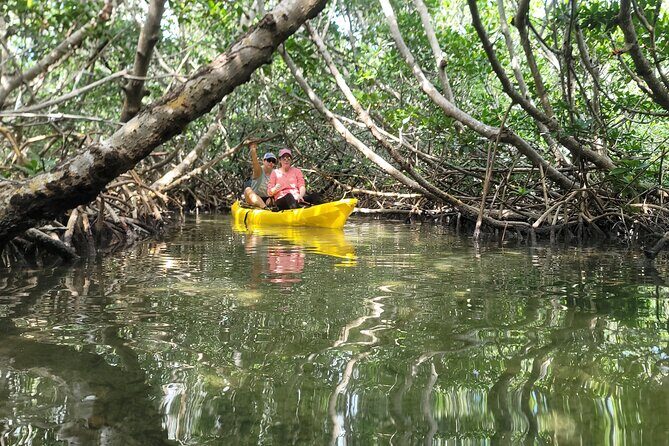
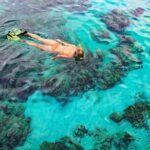
The tour’s centerpiece is the moment you reach a small break in the mangrove forest. Instead of staying sealed in corridors the whole way, you get a change of scenery: a stunning saltwater lagoon surrounded by mangrove forests.
You’ll spend a few minutes there taking it in. This pause isn’t just for photos. It’s a wildlife window—time for your eyes to adjust, for the guide to point things out, and for you to scan the surface and edges. A couple of reviews mention possible manatees, including grazing behavior.
This stop also ties into one of the most talked-about wow moments: jellyfish. People mention jellyfish in the open area around the lagoon region, including upside-down jellyfish being shown up close. The standout detail is that the guide knows where to take you so this isn’t just a random “maybe you’ll see one” situation.
A separate review also notes an option to jump in a swimming hole. That’s worth flagging because it changes the feeling from purely paddling to a more active water break. Just keep in mind the tour is still safety-led, so the guide will be the one deciding what’s appropriate at the time.
After the lagoon break, you turn around and make the leisurely return to the marina where you started. The return isn’t described as rushed; it’s more about enjoying what you learned on the way in and seeing how wildlife reacts when you’re coming back through the tunnels.
Wildlife Sightings: What You Can Expect (And What You Shouldn’t Assume)
Let’s be honest: wildlife isn’t guaranteed. But you can plan around the fact that this tour runs specifically through habitats that support a lot of life.
Common mentions include:
- Manatees (including grazing in the lagoon area)
- Jellyfish (including upside-down types)
- Birds and fish
- Crabs
- Iguanas
- Occasional larger animals like dolphin
- Fish types like tarpon and mullet (in guide-led spotting)
The reason these sightings feel more likely here than on a basic paddle is the guide-led focus. People mention guides like Jade, Lilly, and Atticus by name, and the repeated theme is that they educate while spotting. That means you’re not only hunting visually—you’re also learning the cues that help you spot animals sooner.
I also like that this tour includes the explanation piece. When you learn why mangroves matter, the whole trip clicks into place. Jellyfish sightings are more than a spectacle once you understand the water conditions and the habitat structure that brings things together.
Price and Value: Why $65 Can Feel Like a Good Deal in the Keys
The price is $65 per person for about 3 hours. That includes the kayak and a guide, and it happens in a small-group format with a max of 18 travelers. You’re also getting more than a straight-line paddling session. You’re paying for route guidance through tricky corridors, the lagoon stop, and the wildlife-spotting focus.
What’s not included matters for your planning: there’s no lunch, and private transportation isn’t included. So treat it like a half-day activity. Eat before you go (or plan a post-tour lunch) and build your day around being near the meeting point.
Value-wise, it also helps that people emphasize how guides take you farther into the mangroves than they expected. If you’re the type who likes “the real water, not the edge,” that extra distance can feel like a big part of what you’re paying for.
Who Should Book This Kayak Tour—and Who Might Want Something Else
This is a strong fit for:
- Couples who want a peaceful, scenic outing with an educational guide
- Families across ages, since reviews mention kids enjoying the experience and learning about nature on the water
- Multi-generation groups, where one person might care about wildlife and another might care about scenery and exercise
- People who want to skip crowds and spend time hearing and seeing nature up close
It’s also a good choice if you like the idea of a workout that isn’t punishing. Reviews mention it as a fun exercise with occasional current, but nothing described as extreme.
If you’re thinking about it, ask yourself one question: do you want help spotting life and choosing a route through mangrove corridors? If the answer is yes, this tour’s format is built for that.
If you’re looking for a long, high-adrenaline open-water paddle only, you might find this more about calm creeks and guided nature than speed.
Should You Book Kayak Through Mangrove Forests in the Florida Keys?
Book it if you want a guided mangrove paddle with real chances at memorable wildlife moments, especially jellyfish and possibly manatees in the lagoon area. The small-group setup and tandem sit-on-top kayaks make it feel approachable, and the fact that guides like Jade, Lilly, and Atticus are repeatedly mentioned suggests consistency in how the trip is led.
Hold off if your plans can’t shift around weather. This experience requires good conditions, and the tour can be canceled if conditions aren’t right. And if you hate planning food around activities, remember there’s no lunch included.
Overall, this is the kind of Florida Keys outing that rewards slow attention: the payoff is in the quiet mangrove tunnels, the lagoon pause, and the guide-led way of turning sightings into understanding.
FAQ
How long is the kayak tour?
The tour runs for about 3 hours.
Where does the tour start and end?
It starts and ends at the meeting point at Old Conch Harbor, 90311 Overseas Hwy, Tavernier, FL 33070.
What is included in the $65 ticket price?
You get use of a tandem, sit-on-top kayak and a tour guide. Admission tickets are listed as free.
What wildlife might we see on this trip?
The tour area is known for sightings like manatees, dolphins, jellyfish, birds, fish, crabs, and green iguanas, and guides may also point out things like sponges.
Is the kayak shared or solo?
It’s a tandem kayak, so you’ll share the kayak with a partner in the same vessel.
What should I know about weather?
This experience requires good weather. If it’s canceled due to poor weather, you’ll be offered a different date or a full refund.
Can I get a full refund if I cancel?
Yes. You can cancel up to 24 hours in advance for a full refund. If you cancel less than 24 hours before the start time, it isn’t refunded.