REVIEW · MIAMI
Miami Beach: Guided 2-Tank Reef and Wreck Dive Trip
Book on GetYourGuide →Operated by Squalo Divers · Bookable on GetYourGuide
Two underwater worlds in one outing.
This Miami Beach trip pairs a real shipwreck with a reef swim, so you get history underwater and plenty of marine life in the same 4-hour window. I like that it’s run by certified pros who know where conditions and fish are working best, and I also like the small-group setup for less waiting and more hands-on attention. The one drawback to plan around: you must be scuba certified and have done a dive within the last 12 months.
Check-in is refreshingly easy for Miami Beach—head to Bill Bird Marina at Haulover Park (10800 Collins Ave), find the Sea Mi Amor at slip E15, and you’re off. The trip also includes filtered water, snacks (cookies and chips), and parking, which makes it feel less like a hassle and more like a smooth day on the water.
In This Review
- Key highlights you’ll care about
- Getting to Bill Bird Marina and the Sea Mi Amor at slip E15
- Your 4-hour plan: two one-hour underwater sessions with smart boat timing
- Stop one: the shipwreck encounter and the fish it attracts
- Stop two: reef waters tied to the Florida barrier system
- Marine life you can actually plan for (not just wish for)
- Gear, weights, and the real cost beyond the $107
- What the pros do right, including the guide you might remember
- Who this is perfect for (and who should skip it)
- Should you book the Miami Beach 2-tank wreck-and-reef trip?
- FAQ
- Where is the meeting point for this trip?
- What address should I use for Uber or Lyft?
- How long is the tour?
- Do I need to be scuba certified?
- What’s included in the price?
- What scuba gear is not included, and what does it cost?
- What should I bring?
- Who is this activity not suitable for?
- Is free cancellation available?
Key highlights you’ll care about
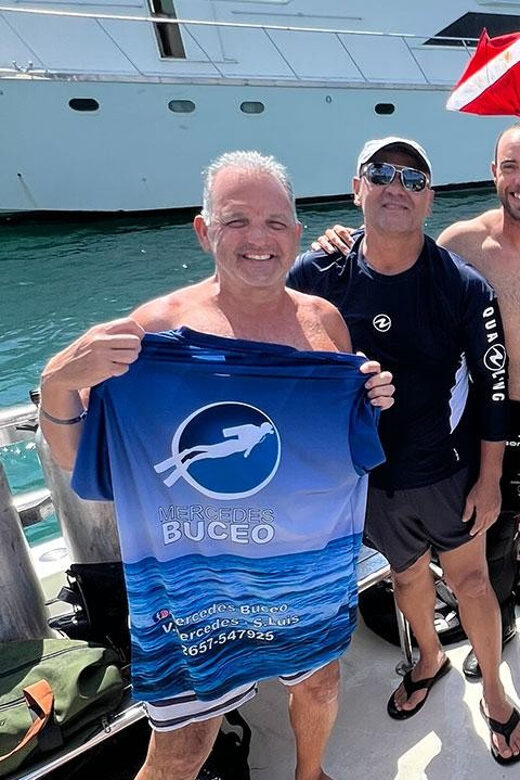
- Shipwreck plus reef in one schedule so you’re not choosing between wreck photos and reef fish
- Small groups that usually mean less crowding underwater and more time with your guide
- Included boat + weights rental so you can budget less than you would for a gear-heavy day
- Warm, clear water expectations that make seeing fish and structure much easier
- English and Spanish guides on board, which helps if you want clear safety info fast
Getting to Bill Bird Marina and the Sea Mi Amor at slip E15
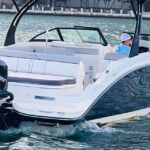
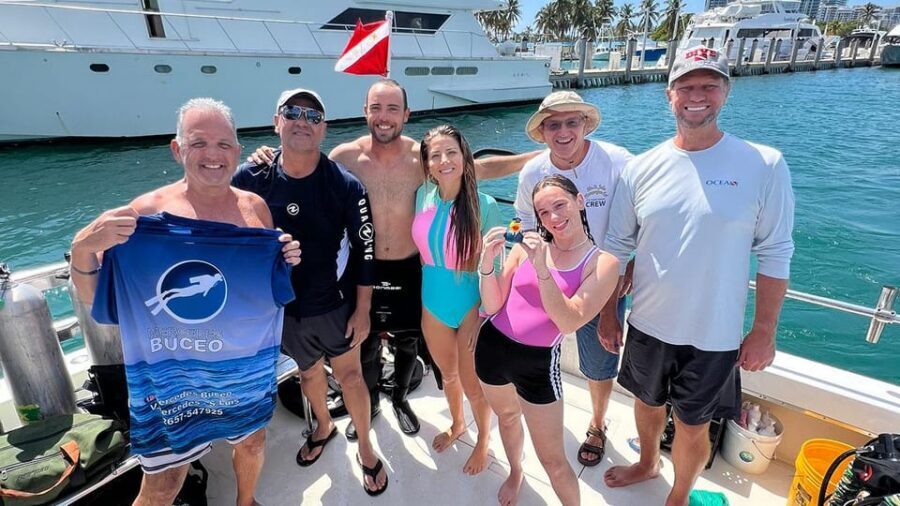
Your day starts at 10800 Collins Ave, Miami Beach. The meeting point is Bill Bird Marina at Haulover Park, and you’ll check in at the boat docked at slip E15. The boat name is Sea Mi Amor, operated by Squalo Divers, which you’ll see referenced in communications and on-site.
If you’re arriving by Uber or Lyft, use a very specific drop-off address: KELLEY FISHING FLEET, 10800 COLLINS AVE, BAL HARBOUR, FL. From there, walk south toward slip E15. This kind of exact routing matters here because marinas can be confusing, and you don’t want to arrive flustered.
Parking is included, which is a big deal around Miami Beach. Once you’re checked in, the staff has you pointed to the boat and you can focus on what you came for: an organized, two-stop underwater day.
You can also read our reviews of more guided tours in Miami

Your 4-hour plan: two one-hour underwater sessions with smart boat timing
The total time is about 4 hours, and the schedule is built around giving you two real underwater windows without turning it into an all-day commitment. Here’s the flow:
You start at 10800 Collins Ave, then you take a ~45-minute water transport ride to the first stop. You’ll have about 1 hour at that first underwater location.
Then there’s a ~20-minute surface transfer to the second stop, followed by another 1 hour underwater. Finally, you return by boat with another ~45-minute ride back to the marina.
Why this timing works: you spend enough time on each location to actually see marine life and get comfortable in the water, but you’re not stuck doing long deadhead boat trips between stops. And because the trip is built around two tanks, you’ll feel like the day has a clear rhythm.
Stop one: the shipwreck encounter and the fish it attracts
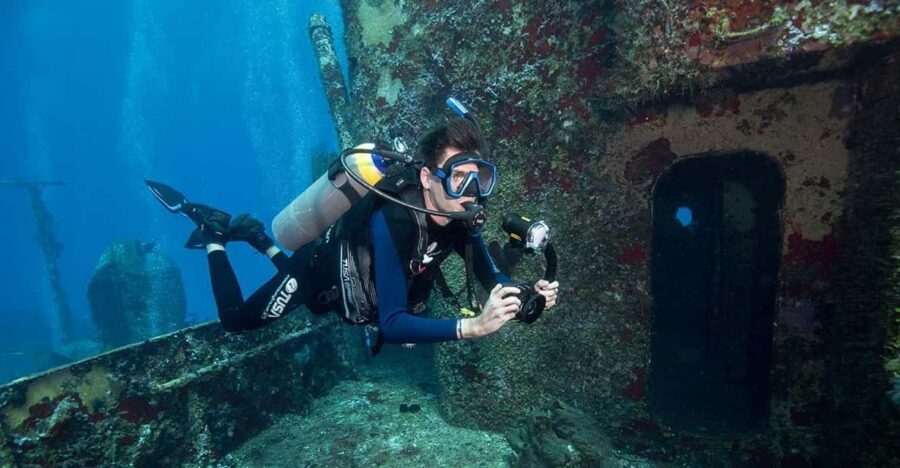
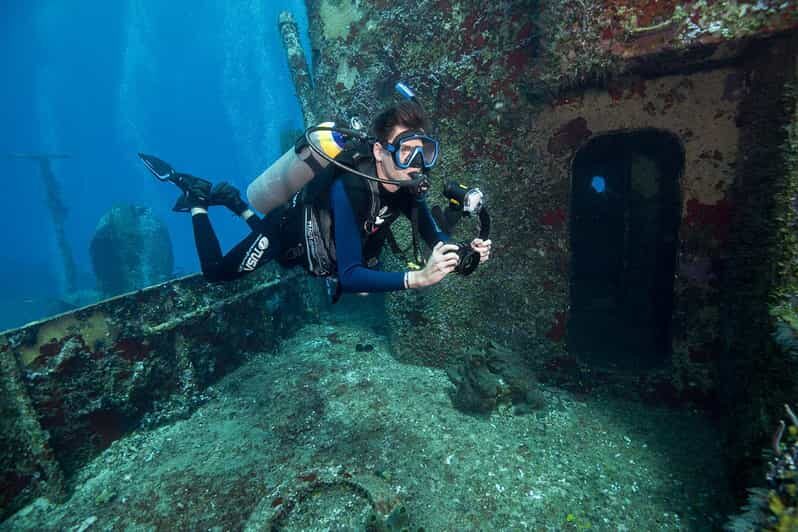
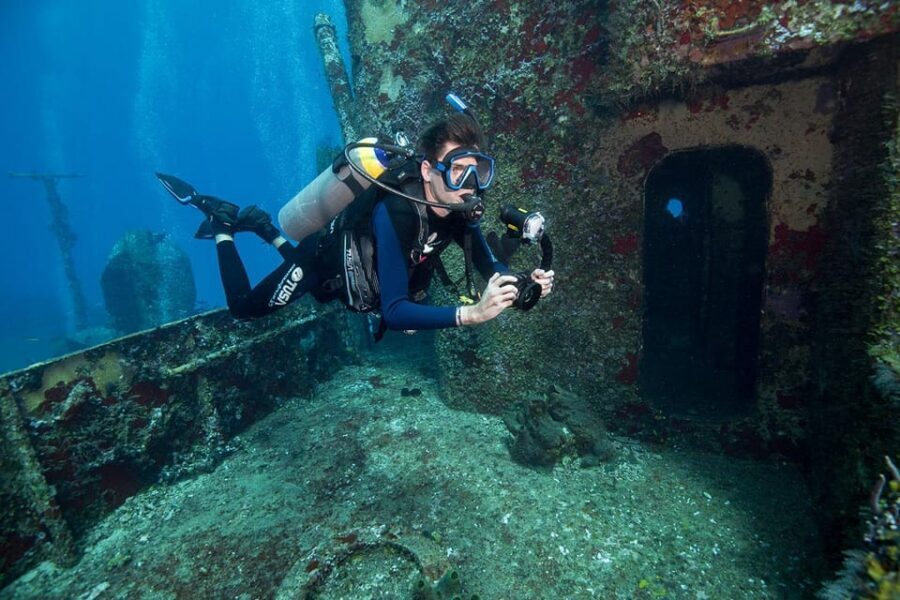
This trip is designed around wreck and reef variety, and the wreck stop is one of the main reasons it’s worth booking. The wrecks you’ll encounter are described as historic sites, and some areas are protected zones. In practical terms, protected waters often mean fish are more confident around structure, so you’re more likely to see activity than just bare metal.
What to look for during the wreck session: structure you can follow, shadows and ledges where critters like to hide, and plenty of small life working the edges. The experience description lists creatures such as octopus, moray eels, and cleaner shrimp, along with bigger visitors like groupers and stingrays depending on conditions.
Even if you’re not obsessed with wreck photography, shipwrecks change how you experience the water. Instead of just seeing coral-like growth on a flat reef, you’re moving through a three-dimensional environment—parts of the wreck create routes, breaks, and pockets where the ecosystem concentrates.
One consideration: if you’re the type who gets anxious about neutral buoyancy or managing equipment around structure, it helps to go in calm and listen closely to your guide’s instructions before you drop in. That’s not a reason to skip—it’s just how to get the most out of a wreck-style site.
Stop two: reef waters tied to the Florida barrier system
The second stop is your reef experience, and it’s where you’ll get the classic Miami-area marine variety. The description points out that Miami sits above the third-largest barrier reef in the world, which is a big part of why the water tends to feel alive with fish.
Reef depth ranges are listed as 20’ to 90’, which matters because depth can change everything: how much light reaches the bottom, how much you see in midwater, and how the dive plan is paced. Your guide will handle the actual plan on the day, but it helps to know the reef isn’t just one shallow wall—it’s a range of conditions.
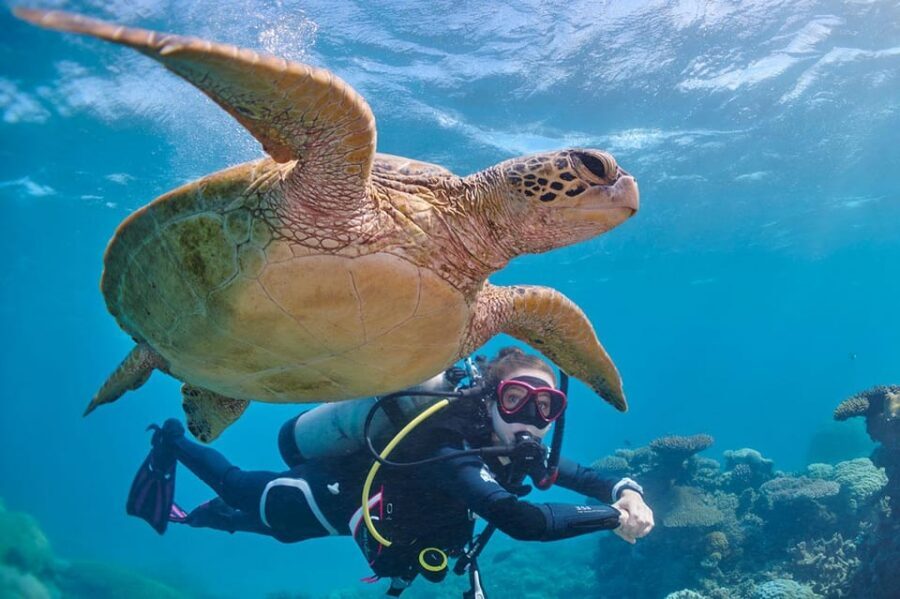
This is also where you’re more likely to spot colorful reef fish and reef-edge behavior. The experience description includes parrotfish, snappers, trunkfish, boxfish, trumpetfish, grunts, damsels, triggerfish, and more. It also includes creatures like arrow crabs, lobsters, squid, and turtles.
If you’re hoping to see turtles or stingrays, reefs are where that tends to happen because they interact with both open water and structure. If you’re newer, reefs can be easier to enjoy because the visual rhythm is smoother than a wreck’s tight angles.
Also, you may see drift-style behavior depending on the plan. The activity mentions drift dives as one option type in the broader offering, so expect that current could play a role if conditions support it.
Marine life you can actually plan for (not just wish for)
A lot of reef descriptions list generic fish. This one is more specific, and that helps you set expectations. The experience description includes a wide spread of species, including:
- Octopus and squid, plus cleaner shrimp and arrow crabs
- Moray eels and groupers
- Parrotfish, snappers, grunts, trunkfish, boxfish, and triggerfish
- Stingrays and turtles
In real-world scuba terms, seeing a particular animal is never guaranteed. But having a list like this is useful because it tells you the operator is targeting locations with established life, not just any random patch of bottom.
What I’d do if you want the best odds of memorable sightings: go in focused on behavior, not checklists. Follow what your guide points out, watch how fish react to structure and your movement, and keep your buoyancy steady. Most great underwater moments are small: a cleaner shrimp doing its job, a moray easing into view, or a turtle cruising past like it owns the place.
Gear, weights, and the real cost beyond the $107
The advertised price is $107 per person for a 4-hour, two-tank style schedule. For Miami Beach, that’s a solid baseline when you compare what’s included: the boat trip, a guide, weights rental, filtered water, refreshments, and snacks, plus parking.
That said, your total cost depends a lot on whether you need gear rental. Scuba gear rental is listed separately:
- Mask: $10
- Fins: $10
- Regulator: $30
- BCD: $25
- Wetsuit: $20
- Air tanks: $26
- Nitrox tanks: $36
Prices are per person, per trip, plus tax.
Here’s how to think about value: if you already own your own mask, fins, and regulator, your add-on costs shrink fast, and the $107 feels like a strong deal because the boat and guide are already covered. If you need everything, the final number can climb quickly—still potentially worth it if you don’t want to haul gear from home or if you want rental convenience.
Two practical tips from the type of day this is:
- Bring a towel and swimwear so you’re not stuck drying off with whatever you have in your day bag.
- Decide ahead of time whether you want Nitrox. It’s offered, but it’s extra cost, so it should be a deliberate choice, not an impulse.
What the pros do right, including the guide you might remember
The trip is guided by certified professionals who are described as knowing the best spots, and that shows up in the way the experience is structured. You have two scheduled underwater sessions with short, reasonable surface transfers, which usually means the crew is running efficiently and keeping the day focused.
Languages are English and Spanish, which matters for safety briefings and clear communication underwater. The experience also notes you’ll need recent scuba experience within the last 12 months, so the guides can run the plan smoothly without spending time on basics.
One name from the feedback stands out: Patricia. A review noted Patricia went with a son and did fantastic, with praise for the quality of service. I can’t guarantee who you’ll get on your date, but it’s a good sign that the crew’s instruction style is working for both adults and family groups that meet the age requirement.
In plain terms, your goal underwater is to relax enough to enjoy the scenery. A well-run guide team makes that easier by helping you manage buoyancy, staying aware of the group, and pointing out what’s actually worth your attention.
Who this is perfect for (and who should skip it)
This is not a casual first-time outing. It’s for scuba-certified divers, and you need to have gone diving within the last 12 months. If you’re returning after a long gap, plan to refresh your skills before booking.
It’s also specifically not suitable for:
- Children under 10
- Pregnant women
- People with heart problems
If you’re traveling with non-divers, this one isn’t designed for them as a spectator activity. The structure is built for people who can meet the scuba requirements and follow safety guidance.
Who tends to love it:
- Certified divers who want both wreck and reef in one outing
- People who prefer smaller groups and quicker attention
- Anyone who wants the Miami Beach experience without spending half a day figuring out logistics
Should you book the Miami Beach 2-tank wreck-and-reef trip?
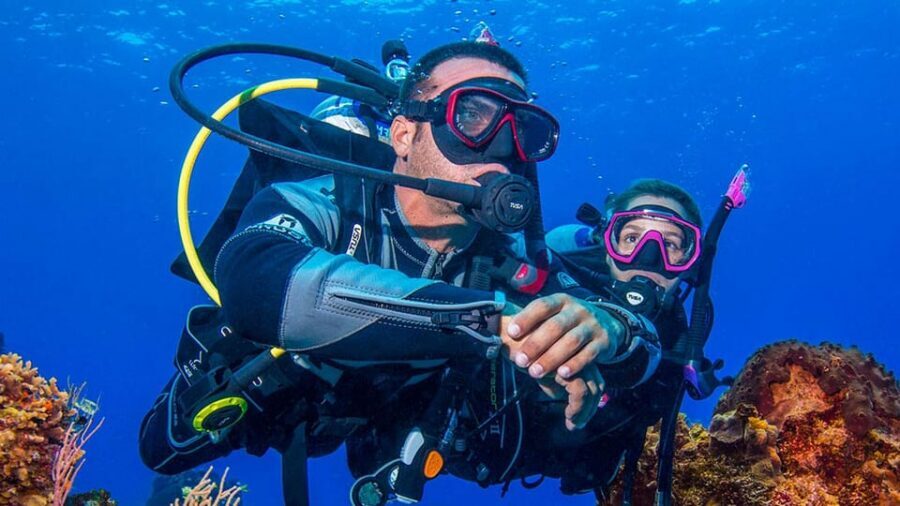
Book it if you want a focused, well-run day with real variety: a shipwreck encounter plus a reef session rather than picking one. The included boat time, weights rental, snacks, and easy marina check-in help keep it feeling practical, not “nickel-and-dime.”
Skip it if you’re not currently within the recent-certification requirement or if wreck-style navigation around structure makes you anxious. Also, if you’ll need full gear rental, run the math first so the final total matches your budget.
FAQ
Where is the meeting point for this trip?
You meet at Bill Bird Marina at Haulover Park, 10800 Collins Ave, Miami Beach, FL 33154. Check in with the dive boat at slip E15 (Sea Mi Amor).
What address should I use for Uber or Lyft?
Use KELLEY FISHING FLEET, 10800 COLLINS AVE, BAL HARBOUR, FL, then walk south toward slip E15.
How long is the tour?
The duration is 4 hours.
Do I need to be scuba certified?
Yes. You need to be scuba certified and have gone diving within the last 12 months.
What’s included in the price?
Included: boat trip, weights rental, dive guide, filtered water, refreshments, cookies and chips, and parking.
What scuba gear is not included, and what does it cost?
Scuba gear rental is not included. Listed prices per person per trip include: mask $10, fins $10, regulator $30, BCD $25, wetsuit $20, air tanks $26, and nitrox tanks $36 (plus tax).
What should I bring?
Bring swimwear and a towel.
Who is this activity not suitable for?
It’s not suitable for children under 10, pregnant women, or people with heart problems.
Is free cancellation available?
Yes. You can cancel up to 24 hours in advance for a full refund.